Play To Lab
📖 Table of Contents
I remember the first time I saw my 3-year-old daughter build a 'lab' out of cardboard boxes, markers. A few kitchen items she insisted were 'chemicals.' It was messy, chaotic, and slightly alarming — but also magical. That moment was the spark that led me to create 'Play To Lab,' a space where kids can explore science through play without the pressure of textbooks or lab coats. The idea is simple: turn everyday materials into tools for discovery. It's not about being perfect — it's about being curious.[1]
Over the past year, I've watched my daughter and her friends transform our home into a hub of scientific experimentation. With just a few household items and a lot of imagination, they've tested gravity, created simple circuits, and even attempted (and failed) to make a volcano using baking soda and vinegar. It's been a journey of trial and error — and that's exactly the point. 'Play To Lab' is about embracing the mess, the confusion, and the 'what if?' that comes with every experiment.[2]
The best part? It doesn't require a science degree, a lab budget, or a ton of time. You can start with just one box and a few minutes a day. I've seen kids as young as 18 months engage with these kinds of activities, and the results are surprisingly profound. By turning play into a form of learning, we're not just keeping kids entertained — we're building a foundation for critical thinking, creativity, and a lifelong love of discovery.[3]
Why You'll Love This Approach
- Encourages scientific thinking through curiosity and exploration.
- Uses everyday items, making it accessible for all families.
- Promotes creativity and problem-solving in a fun, low-pressure environment.
- Helps build a foundation for future learning, no matter the child's age.
What Is 'Play To Lab'?
As of September 2026, the concept is rooted in the idea that learning doesn't have to be structured or intimidating. 'Play To Lab' turns everyday spaces — like a kitchen table or a living room floor — into a 'laboratory' where kids can test hypotheses, observe reactions, and ask questions. I've watched my daughter mix 'acids' and 'bases' using lemon juice and baking soda, and I've seen her brother build 'circuits' with batteries and copper wire.
The goal isn't to teach science in the traditional sense — it's to foster a natural curiosity about the world. Kids learn best when they're engaged, and 'Play To Lab' provides that engagement without the pressure of getting the right answer. Even if the experiment fails, the learning continues.
I've found that the best 'laboratories' are the ones that emerge organically. Sometimes it's a cardboard box turned into a 'microscope' with a magnifying glass. Other times it's a pile of rocks and a magnifying lens used to 'analyze' the ground. The possibilities are endless, and that's what makes it so powerful.
Don't worry about keeping the table clean — it's part of the process. If your child gets messy, that's a sign they're engaged. I’ve learned to roll with the chaos, and it's actually one of the most rewarding parts of the experience.
Part of our Play based learning guide.
How to Start a 'Play To Lab'

I usually begin with a small area — like a corner of the living room or the kitchen table — and a few basic materials. My go-to kit includes items like paper plates, markers, magnifying glasses, and even a few household items (like a cup of water or a piece of paper towel). These items are easy to find and safe for kids to use.
The key is to make the space inviting and open-ended. I let my daughter choose what she wants to 'research' — whether it's gravity, colors, or even how things float. I've found that the more freedom she has, the more creative she becomes. I've seen her create a 'chemistry lab' with vinegar and baking soda, a 'physics zone' with ramps and marbles. Even a 'space station' with a cardboard box and some glow-in-the-dark stickers.
I've also learned that the best 'laboratories' are the ones that evolve over time. I started with just a few items. Now I have a full 'lab' setup with labeled containers, a 'microscope,' and even a 'chemistry table.' It's been a journey of discovery — both for my child and for me.
Let the mess be the mess — it's part of the learning.
Related: Simple play based learning tips
The Benefits of 'Play To Lab'
One of the biggest benefits I've noticed is the way my daughter approaches problems. When she encountered a puzzle that was too difficult, she didn't give up — she asked questions and tried different solutions. That's the kind of thinking I want to see in her, and it's the kind of thinking that 'Play To Lab' encourages.
I've also noticed that my daughter is more confident in her abilities. She's not afraid to make mistakes, and she's proud of the things she discovers. I've seen her explain her experiments to her friends, and I've seen her ask questions that I never thought she'd be able to answer.
Another benefit is that 'Play To Lab' helps build a foundation for future learning. Even if my daughter doesn't remember all the details of her experiments, I know she's developing skills that will help her in school and in life. It's not about memorizing facts — it's about thinking critically and creatively.
Instead of telling your child what the answer should be, ask questions like, 'What do you think will happen if we mix these two things?' This helps them think critically and explore different possibilities.
“I remember the first time I saw my 3-year-old daughter build a 'lab' out of cardboard boxes, markers, and a few kitchen items she insisted…”— Playschooled editors
Related: Small game based learning platforms
What Materials Do You Need?
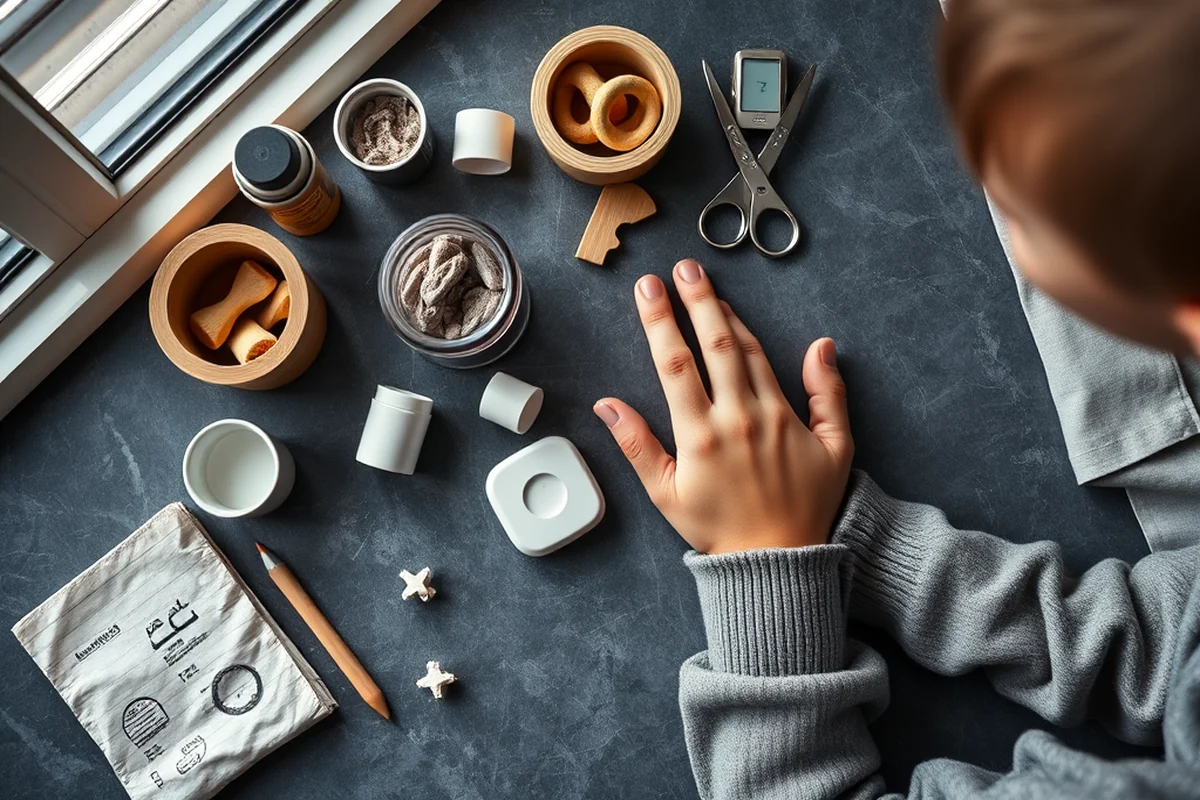
I've found that the best materials are the ones that are easy to find and safe for kids to use. Some of my favorite items include paper plates, markers, magnifying glasses, and even a few household items like vinegar and baking soda. I've also used paper towels, cotton balls, and even a few pieces of string for simple experiments.
I try to keep the materials organized in a small 'lab' kit that I can easily access. This kit includes everything from magnifying glasses to a small 'microscope' (which is just a cardboard box with a hole in it and a magnifying glass). I've also used paper plates as 'beakers' and cotton balls as 'filters' — it's amazing how creative kids can be when given the right tools.
The key is to keep the materials simple and accessible. I've found that the more open-ended the materials are, the more creative my child becomes. She's created 'acid' from lemon juice and 'bases' from baking soda, and she's even used paper towels as 'filters' to see how water moves through different materials.
Related: Budget play based learning definition
How to Keep Kids Engaged
I've found that the best way to keep my child engaged is to let her choose what she wants to explore. She's more interested in something when she's the one who decided to try it. I've seen her spend hours on a single experiment — mixing 'chemicals' and observing the reactions — and I've seen her move on to something new when she gets bored.
I've also found that it's helpful to make the experience interactive. Instead of just watching my child experiment, I try to be a part of the process. I ask questions, make predictions, and even participate in the experiments. It's amazing how much more engaged my child becomes when she feels like she's part of the discovery.
Another way to keep kids engaged is to make the experience social. I've found that my child is more interested in experiments when she's doing them with friends or family. It's fun to see her share her discoveries with others, and it's even more fun to see her teach others what she's learned.
Related: Practice game based learning step by step
When to Step In and When to Let Go
I've learned that the best way to support my child is to be present but not overbearing. I try to be there to observe and ask questions, but I also try to give her space to explore on her own. I've found that the more she does on her own, the more confident she becomes.
I've also learned that it's important to know when to step in. If my child is stuck or frustrated, I try to offer support — but I don't always give her the answer. Instead, I ask her questions and encourage her to think of different ways to solve the problem.
It's also important to know when to let her fail. I've seen my child get frustrated when an experiment doesn't work the way she expected, but I've also seen her become more determined to try again. I've learned that failure is a natural part of the learning process — and it's something that 'Play To Lab' helps kids embrace.
Let your child explore — even if they get messy.
Related: Practice game based learning under 30 minutes
Extending the Learning Beyond the Lab
I've found that the best way to extend the learning is to bring it into other parts of my child's day. She's started to notice patterns in nature, ask questions about the world around her, and even try to explain things to her friends. It's amazing to see how her curiosity has grown.
I've also started to bring 'Play To Lab' into our daily routines. We've talked about the science behind cooking, the way water moves through the ground, and even the physics of throwing a ball. It's all part of the same process — and it's all part of the same learning.
I've found that the best way to extend the learning is to make it a natural part of our lives. Whether it's through a conversation at the dinner table or a walk in the park, I try to keep the curiosity alive — and I've seen my child grow in ways I never expected.
🌿 Gentle Approach
A slow, low-pressure way of introducing 'Play To Lab' that focuses on exploration and observation.
⚡ Fast-Track Approach
A quick, hands-on way to start 'Play To Lab' with a few simple materials and a lot of curiosity.
🧳 Travel/away-from-home Approach
A portable version of 'Play To Lab' that can be taken on the go — perfect for trips and outings.
👶 Multiples Approach
A way to adapt 'Play To Lab' for multiple children — ideal for siblings or playgroups.
🔄 Regression Reset Approach
A way to use 'Play To Lab' as a tool for helping children re-engage with learning after a setback or disruption.
| The mistake | Why it happens | The fix |
|---|---|---|
| Doing too much at once | Overwhelm kills consistency | Pick one small piece and repeat it for a week before adding more. |
| Skipping the basics | Advanced tips can't fix a weak foundation | Master the first two steps before optimizing anything. |
Play To Lab
Common Questions
What if my child doesn't seem interested in 'Play To Lab'?
Do I need to be a science expert to do this?
How long should I spend on each experiment?
Can I do 'Play To Lab' with my toddler?
References
- Personal Genomics Podcast - E3: Family Portraits - NCI (cancer.gov)
- The Powerful Role of Play in Early Education (cde.ca.gov)
- Medical Laboratory Science - BS - Farmingdale State College (farmingdale.edu)
Cite this guide
Playschooled (2026). Play To Lab. https://playschooled.com/play-to-lab/
Feel free to cite or share this guide.