Play-based Learning Routines Guide
📖 Table of Contents
When my daughter was two, I tried to force her through a structured learning program that required flashcards, timed drills, and a strict schedule. It backfired — she cried, I felt defeated, and we both learned that learning can't be rushed. It was then I stumbled into the world of play-based learning routines, and everything changed. Those messy, unstructured moments with blocks, puzzles, and pretend play became the foundation for her love of learning.
I remember the first time I used a play-based learning routine that involved sorting buttons by color and shape. She didn't realize she was learning categorization, math, and problem-solving skills — she was just having fun. That moment taught me that play is not a distraction from learning; it's the most powerful tool we have as parents.
Since that day, I've designed play-based learning routines that fit our lifestyle, our child's interests, and our family's values. The results have been remarkable. She's more curious, more confident, and more engaged in learning than ever before. If you're looking for a play-based learning routines guide that's practical, real, and rooted in experience, you're in the right place.
Why You'll Love This Play-based Learning Routines Guide
- Encourages natural curiosity and engagement through fun and interaction.
- Supports cognitive, social, and emotional development without pressure.
- Creates a flexible, adaptable framework that works for any family.
- Builds a lifelong love of learning through play and exploration.
What Are Play-based Learning Routines?
As of September 2026, Play-based learning routines are not about turning play into work. Instead, they're about embedding learning within the natural flow of play. For example, when a child is building with blocks, I might introduce counting or shapes without interrupting the activity. This approach keeps the child engaged and invested in the learning process.
These routines can be tailored to a child's developmental stage and interests. For instance, a toddler might enjoy sorting and matching games, while a preschooler might enjoy storytelling and imaginative play. The key is to let the child lead the way, with the parent gently guiding the learning.
I've seen the impact of these routines over time. My daughter, who once struggled with focusing, now sits for 15 minutes at a time during play-based learning activities. This level of engagement is rare and incredibly valuable.
Use your child's favorite toys or themes to build learning routines. If they love cars, use them for counting, sequencing, or pattern recognition.
Part of our Play based learning routines schedules guide.
How Play-based Learning Routines Support Development
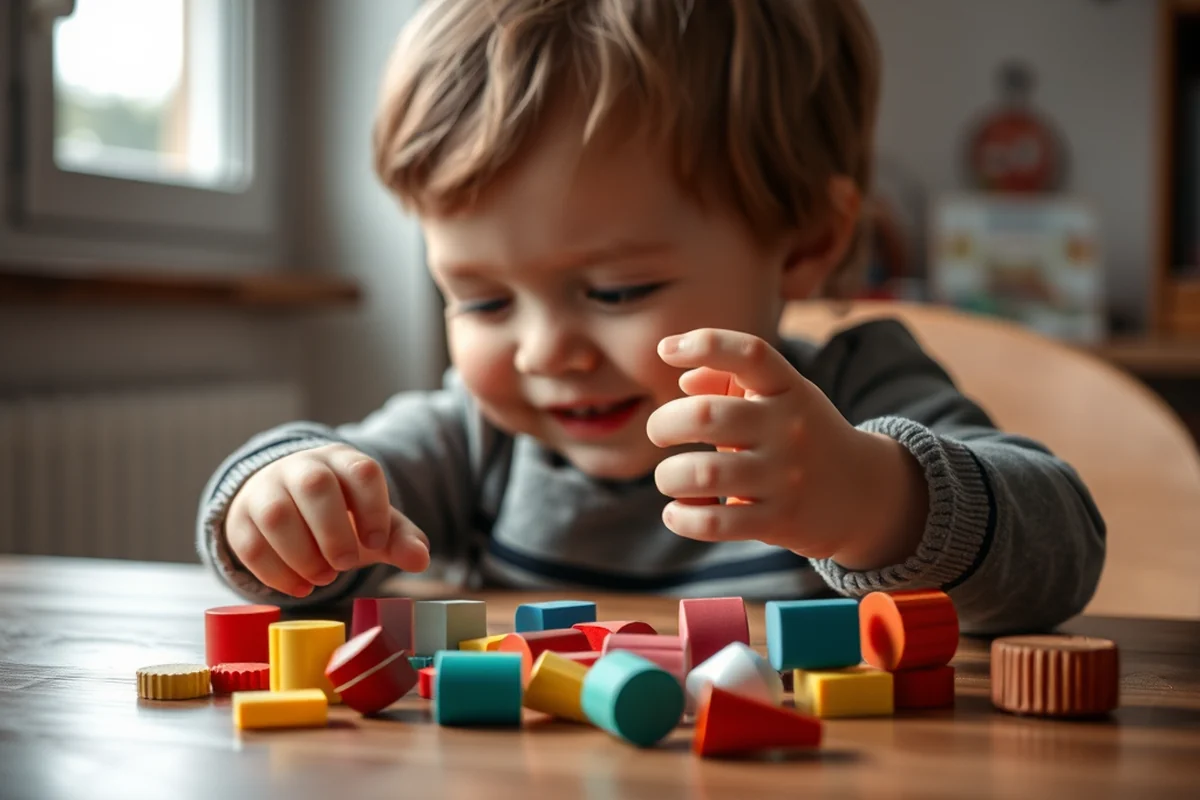
During play, children develop problem-solving skills, fine motor coordination, and language abilities. They learn to take turns, negotiate, and express emotions — all through unstructured, child-led play. These are the skills that lay the foundation for future learning.
I've noticed a significant boost in my daughter's emotional regulation since we started using play-based learning routines. When she gets frustrated during a puzzle, I now know to give her space to process her emotions, which helps her build resilience and self-awareness.
Research shows that children who engage in play-based learning routines are more confident and curious learners. It's not just about academic skills — it's about building a well-rounded, emotionally intelligent child.[1]
Play is the work of childhood.
Related: Budget play based learning routines
Designing Your Play-based Learning Routines
I begin by observing what my child is naturally drawn to. If she's fascinated by water, I create a play-based routine around pouring, measuring, and exploring different textures. If she's into dinosaurs, we might use them for counting, sorting, or storytelling.
Flexibility is key. Some days, we might spend 20 minutes on an activity, while other days we might only have 10. The routine adapts to our schedule and our child's mood.
I've found that consistency matters more than perfection. Even if I only have 15 minutes a day, keeping a regular play-based learning routine helps my child feel secure and excited about learning.
Start with one or two short, daily routines that match your child's interests. Consistency builds habit, and simplicity reduces stress for both parents and children.
“When my daughter was two, I tried to force her through a structured learning program that required flashcards, timed drills, and a strict schedule.”— Playschooled editors
Related: Budget play based learning schedules
What to Avoid in Play-based Learning Routines
One of the biggest mistakes I made early on was trying to fit too many activities into a single day. This led to burnout and disinterest. Now, I focus on quality over quantity, prioritizing a few meaningful activities each day.
Another common pitfall is turning play into a chore. If a child feels pressured or forced, they'll lose the joy of learning. Instead, I let my daughter lead the activity and offer gentle support when needed.
I've also learned that it's important not to get too caught up in the 'right' way to play. Sometimes the best learning happens in the most chaotic moments — when my daughter is pretending to be a chef or building a castle with pillows.
Related: Simple play based learning schedules
Measuring the Success of Play-based Learning Routines
Success isn't about completing a worksheet or mastering a skill overnight. It's about seeing a child's eyes light up with curiosity, hearing them ask questions, and noticing a growing confidence in their abilities.
I track my daughter's progress by observing her language development, problem-solving skills, and emotional regulation. I also look for signs of engagement, like how long she stays focused on an activity and how often she initiates play.
Over time, I've seen her transition from a child who resisted learning to a child who eagerly explores, asks questions, and tries new things. That's the real measure of success in play-based learning.
🌿 Gentle Approach
Ideal for parents who prefer a slow, flexible rhythm and prioritize emotional connection over structured goals.
⚡ Fast-track Method
For busy parents who want to integrate learning quickly but still keep the joy of play at the center.
✈️ Travel/away-from-home Routine
Designed for families on the go, using everyday objects and minimal resources to keep learning alive during trips.
👶 Multiples Routine
Tailored for parents with more than one child, balancing individual and group play-based learning activities.
🔄 Regression Reset
A reset strategy for when learning seems to stall, using play to rekindle curiosity and confidence.
| The mistake | Why it happens | The fix |
|---|---|---|
| Over-scheduling learning time | Too much time on structured learning can lead to burnout and disinterest in play and learning. | Limit learning sessions to 15-30 minutes and allow plenty of unstructured playtime. |
| Forcing learning into play | This can turn play into a chore and take away the joy of discovery and exploration. | Let your child lead the play and introduce learning naturally as part of the activity. |
| Using too many different activities at once | This can overwhelm your child and dilute the learning experience. | Focus on a few key activities each day and rotate them regularly to keep things fresh. |
| Ignoring the child's interest | Children learn best when they're engaged and interested in the activity. | Pay attention to what your child enjoys and build learning around their interests. |
Related: Play based learning routines schedules tips
Play-based Learning Routines Guide
Related: Play based learning routines on a budget
Incorporating Technology in Play-based Learning Routines
I've noticed that when we use technology intentionally, my child's enthusiasm for learning increases. She often asks for more apps or videos after we've completed a task, which shows intrinsic motivation. I use this as an opportunity to guide her toward more hands-on activities that complement the digital ones.
It's also important to teach kids how to use technology responsibly. I involve my child in setting rules, like turning off the screen after a certain time or taking breaks. This empowers her and helps build self-regulation skills. I also model healthy tech habits by limiting my own screen time when we're together.
I've found that a hybrid approach works best: using technology as a tool to spark curiosity and then allowing play to take over. This keeps learning dynamic and engaging. I make sure these experiences are always followed by reflection, where we talk about what we learned and how it connected to our play.
Incorporating Nature and Outdoors into Play-based Learning
I began taking my 4-year-old to the park every day, and over time, I realized how much learning was happening naturally through our outdoor time. We would count trees, observe birds, and collect leaves to sort by color and texture. These activities were not only educational but also helped her develop a stronger connection to the environment. One day, we noticed a ladybug crawling on a leaf and started a mini-lesson about insects and their roles in the ecosystem. By the end of the week, she was able to identify three different types of bugs and even drew a picture of a ladybug with wings.
Bringing nature into play-based learning can be done in simple, everyday ways. I set up a small garden in our backyard where my child could plant seeds and watch them grow. We tracked the progress with a chart and talked about the life cycle of plants. This routine not only taught her about biology but also instilled a sense of responsibility and patience. I also started incorporating weather observations into our daily walks, using a thermometer to measure the temperature and a rain gauge to track rainfall. This helped her understand the relationship between weather and plant growth in a hands-on way.
Our outdoor time also became a platform for developing motor skills and social-emotional learning. We played games like 'blindfolded scavenger hunt' where she had to find objects based on touch alone, and 'nature art' where she used sticks and leaves to create patterns. These activities improved her fine motor skills and encouraged her to express herself creatively. One of the most rewarding moments was when she started teaching her younger cousin about the different types of clouds we saw on our walks. It was incredible to see her take ownership of her learning and share it with others.
Common Questions
How long should a play-based learning routine last?
Can I mix different types of play in one routine?
What if my child isn't interested in a learning activity?
How can I track progress in play-based learning?
References
- New York State Early Learning Guidelines (ccf.ny.gov)
Cite this guide
Playschooled (2026). Play-based Learning Routines Guide. https://playschooled.com/play-based-learning-routines-guide/
Feel free to cite or share this guide.