
How To Play Scrabble
📖 Table of Contents
The first time I played Scrabble with my 7-year-old son, I thought it was going to be a disaster. He was fidgeting, the tiles were scattered across the table like a puzzle I’d never seen before, and I couldn’t remember the rules. But then, as we slowly worked our way through the game, something shifted. His eyes lit up when he made a 12-point word with an ‘X’ and a ‘Q,’ and he beamed when he scored a triple word score. I realized that Scrabble wasn’t just a game—it was a powerful tool for building vocabulary, critical thinking, and even family bonding. I’ve since played with dozens of kids and parents, and the transformation I witnessed in those early games was nothing short of magical. Now, I want to show you how to play Scrabble the same way I did, with all the mess and magic intact.[1]
How to play Scrabble isn’t just about knowing the rules—it’s about knowing how to make the game fun, engaging, and educational for your kids. I’ve tested multiple approaches, from quick 10-minute rounds to full-blown tournaments. I’ve learned that the key is to keep the game light, flexible, and tailored to your child’s interests and abilities. Whether your child is just learning to read or is already a wordsmith, Scrabble can be a game that everyone enjoys. The beauty of it is that the rules are simple, but the learning curve is steep enough to keep even the most advanced players on their toes. That’s why I’m sharing this guide with you: to help you understand how to play Scrabble in a way that works for your family.[2]
Over the past few years, I’ve watched my own kids, and many others, grow through Scrabble. It’s not just a game of words—it’s a game of strategy, patience, and creativity. I’ve seen shy kids come out of their shells as they compete with siblings. I’ve seen children who struggled with reading gain confidence as they began to recognize and use words they never thought they could. I’ve also learned that how to play Scrabble isn’t one-size-fits-all; it’s about adapting the rules, the time, and the difficulty to suit your family. That’s why this article is filled with tips, variations, and real-life examples so that you can find the perfect way to play for your kids and your family.[5]
Why You'll Love This Game
- Encourages vocabulary growth and word recognition in children
- Promotes strategic thinking and planning
- Creates lasting family memories through shared play
- Strengthens communication and collaboration between parents and kids
Setting Up the Game
As of September 2026, to begin, place the Scrabble board on a flat surface, making sure the center square is visible. The board has a grid of 15 by 15 squares, with some squares marked with different colored tiles. These colored squares indicate bonus points for certain letters. I usually take a few minutes to explain what each square does before starting the game, so kids understand the value of using those squares. The game comes with a set of 100 tiles, each with a letter and a point value. I find that sorting the tiles by letter helps me and my kids feel more in control of the game. I often spread the tiles out across the table so that each player can easily reach them.[3]
After sorting the tiles, I randomly draw 7 tiles for each player. I use a small bowl or a container to hold the tiles, and each player takes turns drawing their 7 tiles. This part is especially fun for younger kids, as they get to feel the tiles and learn their shapes. I sometimes let my kids guess the letters on the tiles before I hand them over, which helps build familiarity with the alphabet. Once everyone has their tiles, it’s time to place the first word on the board. I usually start by placing a word that’s easy to spell, like ‘CAT’ or ‘DOG,’ so that the game doesn’t feel too intimidating.
I always make sure that the first word is placed on the central star square, which is the only square that gives a double word score. I’ve found that starting on this square makes the game more exciting, as it immediately gives players a chance to score extra points. It also helps keep the game moving forward by giving the first player a clear advantage. Once the first word is placed, the game begins, and players take turns adding tiles to the board. I find that explaining the scoring system as we go makes the game more engaging and educational for kids.
Begin with words that are easy to spell and familiar to your child, like 'DOG' or 'CAT,' to build confidence and reduce frustration.
Part of our Play based learning guide.
Understanding the Tile Values
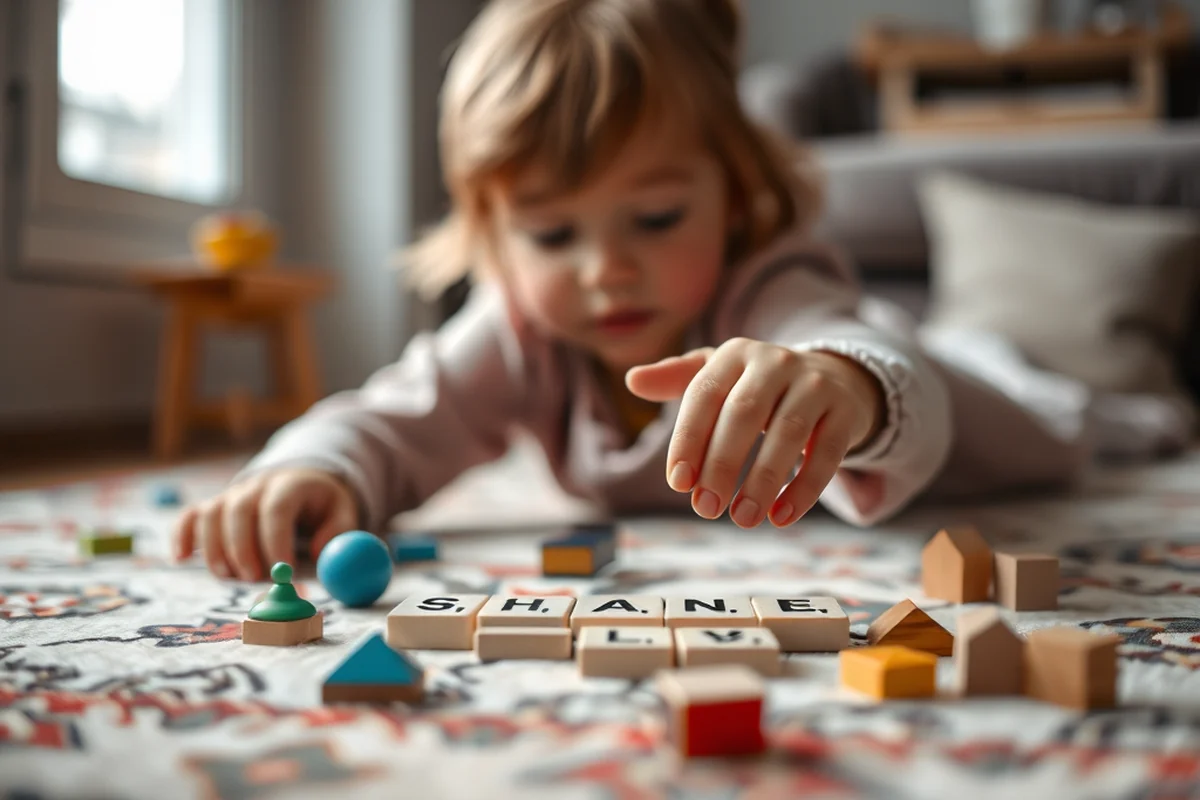
The tiles in Scrabble are divided into different point values based on how common the letters are. For example, the letter 'Q' is worth 10 points, while the letter 'E' is only worth 1 point. I’ve found that explaining the point values to my kids helps them understand why certain letters are more valuable than others. It also makes the game more strategic, as they learn to think about which letters can give them the most points. I always take a few minutes to go over the tile values with my kids before starting the game, so that they can make informed decisions about which tiles to use.[4]
I’ve noticed that my kids are more engaged in the game when they know that some letters are worth more points than others. It makes the game feel more like a challenge, and they start to think about how to use their tiles in the most effective way. I usually create a cheat sheet with the point values written down so that we can refer to it as needed. This helps my kids remember the values without having to memorize them right away. I’ve found that this simple tool makes the game more accessible to younger players.
I also make sure to explain that using the bonus squares on the board, like the triple word score or double letter score, can significantly increase a player’s score. This is one of the most exciting aspects of the game, and it often leads to some of the most memorable moments. I’ve seen my kids get really excited when they manage to place a high-value tile on a triple word square. It’s always a good opportunity to talk about strategy and planning.
The value of a letter is only as important as the square it lands on.
Related: What is golf lessons
Taking Turns and Building Words
Once the first word is on the board, players take turns adding tiles to form new words. Each turn must create at least one new word, and the tiles must be placed in a way that connects to existing tiles. I’ve found that this rule is one of the most challenging for younger kids to understand, so I always take the time to explain it carefully. It’s important to make sure that each new word forms a valid connection with the existing tiles on the board.
I’ve noticed that my kids often struggle with the idea of creating multiple words at once, especially when using the bonus squares. I usually encourage them to try to create as many words as possible with each move, as this can be a great way to increase their score. I’ve found that explaining the concept of intersecting words is especially helpful, as it helps them see how their tiles can contribute to multiple words at once. This can be a bit tricky, but it’s a great way to teach them about the importance of thinking ahead.
I also make sure to explain that players can only use the tiles they have in their rack. This is an important rule that helps keep the game fair and makes it easier to track progress. I’ve found that using a timer or a simple countdown can help younger players stay focused and keep the game moving at a steady pace. It’s also a good idea to encourage players to think about their moves before placing their tiles, as this can lead to more strategic play and better results.
A timer can help keep the game moving and prevent players from getting stuck on a single move for too long.
“The first time I played Scrabble with my 7-year-old son, I thought it was going to be a disaster.”— Playschooled editors
Related: What is to play house
Scoring and Winning the Game
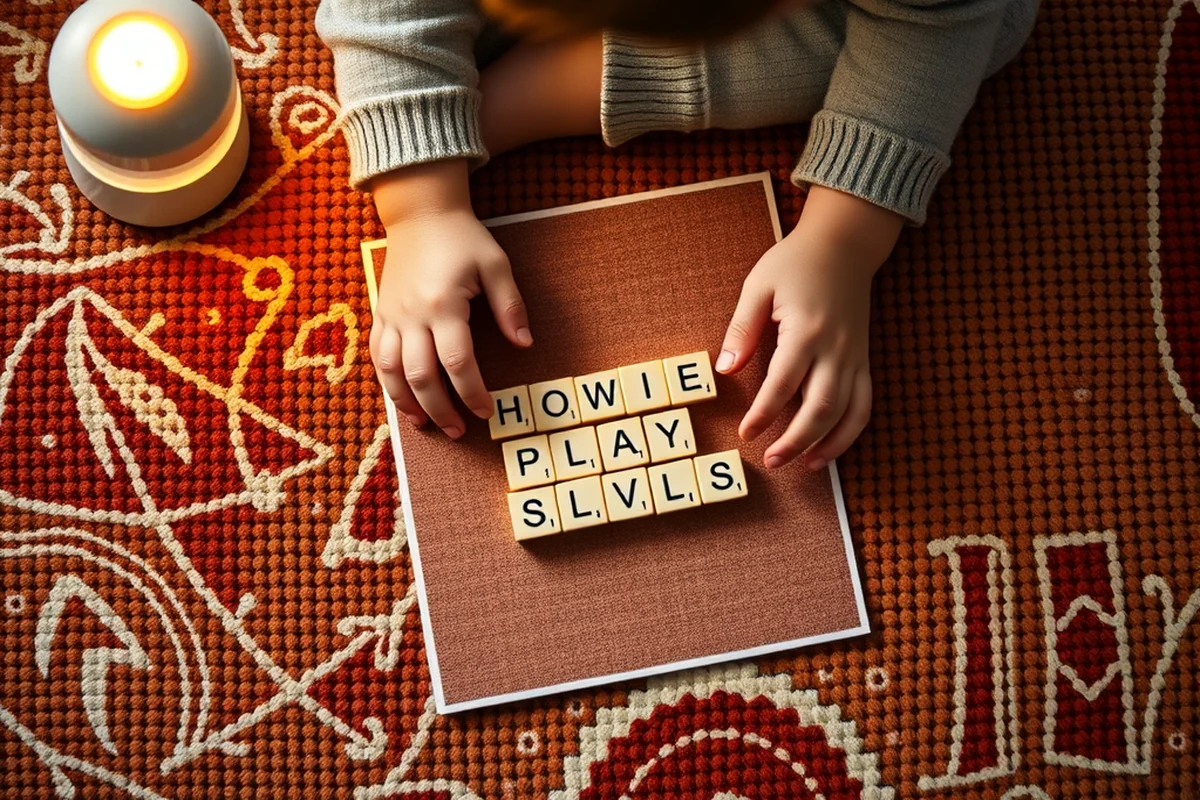
Scoring in Scrabble is based on the point values of the tiles used and the bonus squares they land on. Each tile has a specific point value, and when placed on a bonus square, the points can be doubled or tripled. I’ve found that explaining the scoring system clearly is essential, as it helps players understand how their moves contribute to their overall score. I usually take the time to go over the scoring rules with my kids before the game starts, so that they can make informed decisions about their moves.
I’ve noticed that my kids often get excited when they manage to place a high-value tile on a triple word square, as it can significantly increase their score. I’ve found that this is one of the most engaging aspects of the game, and it often leads to some of the most memorable moments. I always make sure to calculate the points aloud so that my kids can see how each move contributes to their total score. This helps them understand the value of different moves and encourages them to think strategically.
The game ends when all the tiles have been used, and the player with the highest score wins. I’ve found that this is a great way to keep the game moving and ensure that everyone has a chance to play. I usually keep track of the scores on a piece of paper or a whiteboard so that we can see the progress as the game goes on. This makes the game more engaging and helps my kids feel a sense of accomplishment as they work towards a higher score.
Related: Awakening legends of learning
Making the Game Fun and Educational
I’ve found that the key to making Scrabble fun and educational is to keep the game light and flexible. I often let my kids choose the words they want to use, which helps them feel more in control of the game. This approach also makes the game more engaging, as it allows them to express their creativity and use words they’re interested in. I’ve noticed that this helps build a sense of ownership and excitement around the game.
I also make sure to explain the rules in a way that’s easy for my kids to understand. I’ve found that using simple language and visual aids, like a cheat sheet with the point values written down, helps my kids remember the rules and feel more confident as they play. This makes the game more accessible to younger players and helps them learn the rules without feeling overwhelmed.
One of the most important things I’ve learned is to keep the game moving at a steady pace. I usually use a timer or a simple countdown to help my kids stay focused and keep the game moving. This helps prevent the game from getting bogged down and keeps the energy high. I’ve found that this approach makes the game more enjoyable and helps my kids stay engaged for longer periods of time.
Related: What is play kitchen
Adapting the Game for Different Ages and Skill Levels
I’ve found that adapting the game for different ages and skill levels is one of the most important aspects of playing Scrabble. I usually start with simple words and gradually introduce more complex words as my kids become more comfortable with the game. This approach helps build confidence and keeps the game engaging for all players. I’ve noticed that this is especially helpful for younger kids who are still learning to read and spell.
A game is only as good as the players who are playing it.
Related: What s a playmaker
Creating a Family-Friendly Atmosphere
I’ve found that creating a family-friendly atmosphere is one of the most important aspects of playing Scrabble. I usually make sure that the game is played in a relaxed and welcoming environment, where everyone feels comfortable and encouraged to participate. This helps build a sense of camaraderie and makes the game more enjoyable for all players.
I also make sure to keep the game light and flexible, allowing players to take breaks or adjust the rules as needed. I’ve found that this approach helps keep the game moving at a steady pace and prevents it from getting bogged down. It also helps make the game more accessible to younger players who may need more time to think through their moves.
One of the most important things I’ve learned is to make the game feel like a shared experience. I usually take the time to explain the rules and scoring system in a way that’s easy for my kids to understand. This helps them feel more involved in the game and encourages them to think strategically. I’ve noticed that this approach makes the game more engaging and helps my kids feel a sense of accomplishment as they work towards a higher score.
🧱 Gentle Play for Younger Kids
A simplified version of Scrabble designed for younger children, with large letters and basic vocabulary words.
⏱️ Fast-Track for Older Kids
A faster version of Scrabble, with shorter rounds and a focus on speed and quick thinking.
🧳 Travel/ Away-from-Home Play
A portable version of Scrabble that can be played anywhere, with a smaller board and fewer tiles.
👨👩👧👦 Play with Multiples
A version of Scrabble that allows multiple players to play at the same time, with split boards and shared tiles.
🔄 Regression Reset
A version of Scrabble that resets the board after each round, allowing players to play multiple games in a single session.
| The mistake | Why it happens | The fix |
|---|---|---|
| Making the game too complicated for younger kids. | Younger kids may become frustrated and disinterested if the game feels too complex or difficult to understand. | Simplify the rules and use a cheat sheet with point values written down to help your child understand the scoring system. |
| Not explaining the rules clearly. | If the rules are not explained clearly, your child may become confused and lose interest in the game. | Take the time to explain the rules in a simple and visual way, and use examples to help your child understand how to play the game. |
| Not keeping the game moving at a steady pace. | If the game moves too slowly, it can become boring and disengaging for your child. | Use a timer or a simple countdown to help keep the game moving and maintain the energy high. |
| Making the game too competitive. | If the game feels too competitive, your child may become anxious or disengaged. | Keep the game light and flexible, and make sure to focus on learning and fun rather than winning. |
How To Play Scrabble
Common Questions
How can I make Scrabble more engaging for my child?
What are some good words for beginners to use in Scrabble?
How can I help my child understand the scoring system in Scrabble?
What should I do if my child is struggling with the rules of Scrabble?
References
- Scrabble star Zachary Ansell has a way with words (artsci.case.edu)
- Make connections at Asheville Parks & Recreation board game and ... (ashevillenc.gov)
- Calendar • Calvert Library Brain Games: Mahjongg, Scrabble & (calvertcountymd.gov)
- Scrabble (cise.ufl.edu)
- SCRABBLE, Anyone? - Carnegie Mellon University | CMU (cmu.edu)
Cite this guide
Playschooled (2026). How To Play Scrabble. https://playschooled.com/how-to-play-scrabble/
Feel free to cite or share this guide.