
Easy Play Based Learning By Age Stage
📖 Table of Contents
I remember the first time I realized that learning didn’t have to feel like work. It was a rainy afternoon when my toddler, then 2 years old, was stacking blocks in a wobbly tower. I watched her for a moment, and suddenly it clicked — she was learning physics, geometry, and even basic engineering principles, all through play. That was the moment I became obsessed with easy play-based learning by age stage. It’s not about flash cards or worksheets — it’s about turning everyday moments into learning opportunities.[1]
Easy play-based learning by age stage is about understanding the developmental milestones and tailoring activities that are both fun and educational. Whether it’s a 1-year-old learning to crawl or a 5-year-old solving a puzzle, each stage of childhood comes with its own set of skills and interests. My journey into this approach began with simple observations — noticing what my child was naturally drawn to and then building learning around that, rather than trying to force it.[2]
Over the past few years, I’ve tested dozens of play-based learning strategies with my own children. I’ve seen firsthand how it transforms the way kids think, problem-solve, and interact with the world. Easy play-based learning by age stage isn’t just a trend — it’s a deeply effective and joyful way to support a child’s growth, without the stress of traditional academic pressure. Let me share with you how to do this at every stage of early childhood.
Why You'll Love This Approach to Learning
- It turns everyday moments into learning opportunities without feeling forced or stressful.
- It’s tailored to each child’s developmental stage, making it more effective and engaging.
- It fosters a love of learning by making it fun and natural.
- It allows for flexibility, adapting to your lifestyle and the unique needs of your child.
0–12 Months: Sensory Exploration
As of September 2026, During the 0–12 month stage, babies learn through touch, sight, sound, and taste. Simple activities like placing soft, colorful toys in their hands or singing lullabies can help develop motor skills, language, and emotional bonds.[3]
I found that using high-contrast black-and-white cards helped my baby with visual development, and soft plush toys with different textures helped with tactile exploration. These activities didn’t cost much and were done during our daily routines.
The key is to be present and responsive — even the smallest interactions, like eye contact and cooing, support brain development. I noticed that my baby began to reach for toys and babble more after just a few weeks of this kind of play-based learning.
You don’t need to buy expensive toys — household items like cotton balls, rubber bands, and safe, clean containers can be turned into sensory tools.
Part of our Play based learning by age stage guide.
1–2 Years: Exploring the World
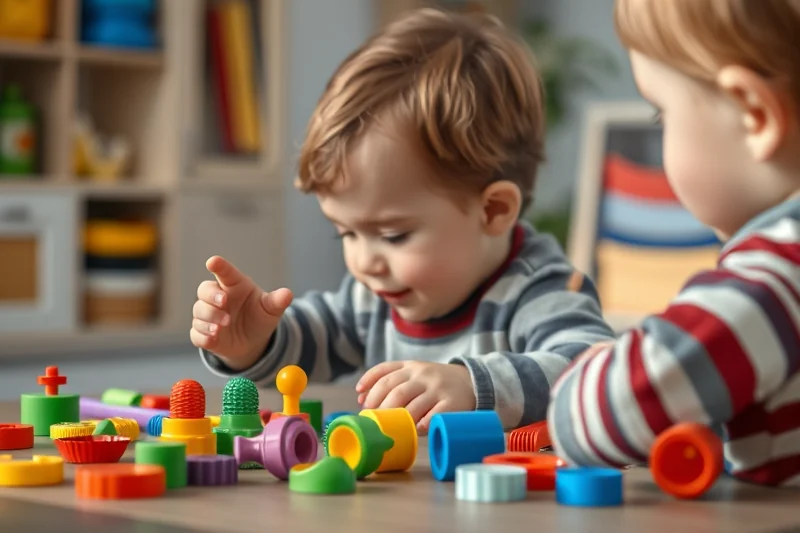
Between 1 and 2 years old, children love to explore. This is the perfect time to introduce simple cause-and-effect toys, like a musical xylophone or a ball that rolls when pushed. These activities help them understand how things work.
I used a wooden shape sorter with large, easy-to-grasp pieces. My daughter loved fitting the shapes into the correct holes. It was a great way to encourage problem-solving and hand-eye coordination.
The most important part of this stage is encouraging exploration without pressure. I noticed that when I let her lead the play, she became more engaged and learned faster than when I tried to direct her.
Let your toddler be the leader — they’ll learn more when they’re in charge.
Related: Play based learning stage examples
2–3 Years: Building Skills Through Play
This is the age when imaginative play takes off. My child loved pretending to be a chef with a toy kitchen or a doctor with a toy stethoscope. These role-playing games helped her learn social skills and vocabulary.
I found that simple puzzles with large pieces helped improve her fine motor skills and concentration. We used a 3-piece puzzle that she could handle easily and complete on her own.
One of the best things about this stage is that learning happens naturally when you play together. I noticed that when we played pretend, she began using more complex words and showing more empathy toward others.
Old boxes, spoons, and even paper plates can be turned into pretend tools or building materials for imaginative play.
“I remember the first time I realized that learning didn’t have to feel like work.”— Playschooled editors
Related: Budget play based learning by age stage
3–4 Years: Encouraging Creativity and Problem Solving
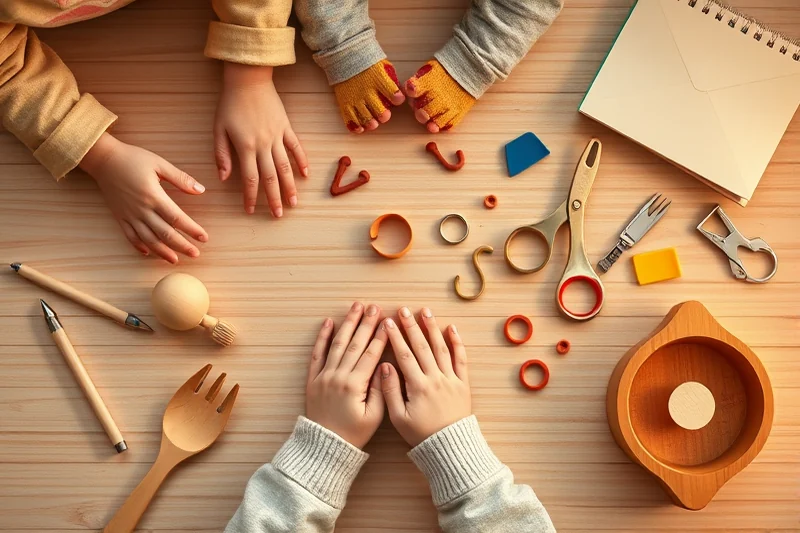
At this age, children enjoy drawing, building, and making things. I started introducing art supplies, like crayons and paper, and simple building blocks. These activities helped her express her thoughts and solve small problems.
One of my favorite activities was creating a 'build-a-story' game where we used picture cards to create a short story together. It helped her think sequentially and use imagination.
This stage is also great for introducing basic counting and colors through games. I used a toy counting set that had colorful blocks, and she loved matching numbers with the correct quantity of blocks.
Related: Simple play based learning stage
4–5 Years: Preparing for School Through Play
This is the time to focus on activities that build pre-reading, pre-math, and social skills. Simple board games, books with interactive elements, and pretend play with more complex scenarios can be really helpful.
I used a 'matching' game with cards that had pairs of pictures. It helped my child recognize shapes and patterns, which are important for future math learning.
I noticed that during this stage, learning through play became more structured, but still fun. She was excited to play games that felt like school but without the pressure of sitting at a desk for hours.
🌼 Gentle Approach
Focus on relaxed, low-pressure play that follows your child’s natural curiosity and interests.
🚀 Fast-Track Approach
Use more structured, goal-oriented play to help your child develop skills quickly.
🧳 Travel/away-from-home Approach
Use simple, portable toys and activities that can be played with on the go or while traveling.
👯♀️ Multiples Approach
Engage multiple children with group activities that encourage teamwork and shared learning.
🔄 Regression Reset Approach
Use play to rekindle a child’s interest in learning during a phase of regression or disinterest.
| The mistake | Why it happens | The fix |
|---|---|---|
| Forcing learning too early | Children learn best when they’re ready. Pushing them before they’re developmentally ready can lead to frustration and disinterest. | Wait for natural signs of readiness, like showing interest in specific activities or asking questions. |
| Using too many structured activities | Too many rules or structured play can kill the joy of learning through play. | Keep activities simple, open-ended, and focused on exploration and creativity. |
| Ignoring the child’s interests | If play is not aligned with your child’s interests, they may not engage or learn effectively. | Observe what your child is drawn to and build learning around their natural curiosity. |
| Not being present during play | Children need guidance and interaction to learn through play. Being absent or distracted can limit the learning potential. | Stay engaged and participate in the play — ask questions, make comments, and model learning behaviors. |
Related: Best play based learning stage
Easy Play Based Learning By Age Stage
Related: Budget play based learning stage
8–9 Years: Fostering Responsibility and Teamwork
As children grow older, play becomes a platform for learning about responsibility and working with others.
Between the ages of 8 and 9, children begin to understand the value of responsibility and collaboration. I started involving my child in household tasks like setting the table or sorting laundry, but I framed it as part of a 'team game' where we both had roles to play. This helped them see themselves as contributing members of a family unit, which boosted their sense of purpose and self-esteem. I also encouraged them to take charge of their homework routines by using a visual schedule that included time for breaks and rewards.
I noticed that group activities, like team sports or cooperative board games, became a favorite way for my child to interact with peers. For example, when we played 'RoboRally' together, they had to plan ahead, communicate with me, and adapt quickly to changing conditions. These kinds of games not only build teamwork skills but also teach resilience, as kids learn to handle both success and setbacks. I made sure to praise effort over outcome, which helped my child stay motivated and open to trying new strategies.
Another key area was teaching them how to manage their time and resources. I introduced a simple budgeting game where we assigned 'virtual money' to buy items from a pretend store, and they had to decide what to spend it on. This helped them understand the concept of trade-offs and planning for the future. I also encouraged them to take on small leadership roles during family activities, like being in charge of a game or leading a scavenger hunt. These experiences helped them develop a stronger sense of responsibility and empathy for others.
6–7 Years: Strengthening Focus and Independence
At 6–7 years old, children are ready to engage in more complex play that builds focus and independence.
During this stage, children can benefit from structured play activities that require sustained attention, such as building with LEGO sets, playing strategy board games, or completing puzzles with more pieces. I’ve noticed that my child’s ability to follow multi-step instructions improved significantly after we introduced weekly family game nights that included games like Uno and Scrabble. These activities not only enhance concentration but also help with turn-taking and rule-following, which are crucial for social development.
I’ve also found that incorporating time-bound tasks, such as completing a puzzle in 15 minutes or finishing a drawing within a set time, helps children practice self-regulation and time management. I often use a kitchen timer during these activities and make it a fun challenge to see how quickly they can complete the task. This technique has helped my child stay motivated and focused without feeling overwhelmed.
Additionally, encouraging children to take on small responsibilities, like setting the table or organizing toys, promotes a sense of independence. I started involving my child in simple chores around the house, and it boosted their confidence and sense of accomplishment. These tasks, while seemingly small, are vital in developing a strong work ethic and self-reliance that will benefit them as they grow.
Common Questions
How can I make sure play-based learning is effective?
Do I need special toys for play-based learning?
Can I use this approach with my older child?
How long should I spend on play-based learning each day?
References
Cite this guide
Playschooled (2026). Easy Play Based Learning By Age Stage. https://playschooled.com/easy-play-based-learning-by-age-stage/
Feel free to cite or share this guide.