
Affordable Play Based Learning Indoor Rainy Day Ideas
📖 Table of Contents
Rainy days are a golden opportunity for parents to transform indoor spaces into dynamic learning environments. I remember one particularly wet afternoon when my kids were trapped indoors for the entire day — but instead of watching TV, we turned our living room into a science lab and our kitchen into a math center. With a few inexpensive items, we created a day filled with curiosity and hands-on learning. These moments became some of my favorite memories, and they proved that even on the dreariest days, creativity can flourish.
Affordable play based learning indoor rainy day ideas are more than just a way to keep kids busy — they're a way to spark their natural curiosity and give them a chance to learn through exploration. I've tested dozens of these ideas over the years, and I've found that the best ones are the ones that can be adapted to any home and budget. Whether you're a parent with limited space or a tight budget, there are ways to make learning fun without spending a fortune.[1]
I've discovered that the key to making rainy day learning stick is to focus on hands-on, sensory experiences that allow kids to learn by doing. For example, we've used paper plates as makeshift art canvases, turned cardboard boxes into forts, and even used leftover pasta to teach counting and sorting. These ideas have not only kept my kids engaged for hours but also helped them develop essential skills in a way that feels natural and joyful.
Why You'll Love This Approach to Rainy Day Learning
- Cost-effective and easy to set up with everyday items
- Encourages creativity and curiosity in children
- Provides a fun and engaging alternative to screen time
- Helps reinforce learning in a natural and playful way
Turn Your Living Room into a Science Lab
As of October 2026, one of the easiest and most engaging ways to keep kids learning on a rainy day is to turn your living room into a makeshift science lab. Using items like baking soda, vinegar, and food coloring, you can create fun experiments that teach kids about chemical reactions and cause and effect. I've found that my kids love mixing baking soda and vinegar to create a mini volcano — and the best part is that you can use a small bowl and some paper towels as the base, making this activity both safe and mess-free.
I've also used magnifying glasses and flashlights to create a simple light and shadow experiment. By placing different objects between the light and the wall, my kids learned about how light travels and how shadows are formed. These are low-cost, high-impact activities that can be repeated multiple times and adapted to different learning levels.
Another fun and educational activity is making a simple circuit with batteries, wires, and a small LED light. I bought a kit for around $10, and it's been a hit with my kids. We've used it to teach them about electricity, conductivity, and basic engineering concepts — all while having a lot of fun.
When creating a science lab at home, always use materials that are safe for kids and avoid any sharp or toxic items. Keep the area clear of clutter to prevent accidents and ensure that your child can move around freely.
Part of our Play based learning indoor rainy day ideas guide.
Create a Math Center with Everyday Items
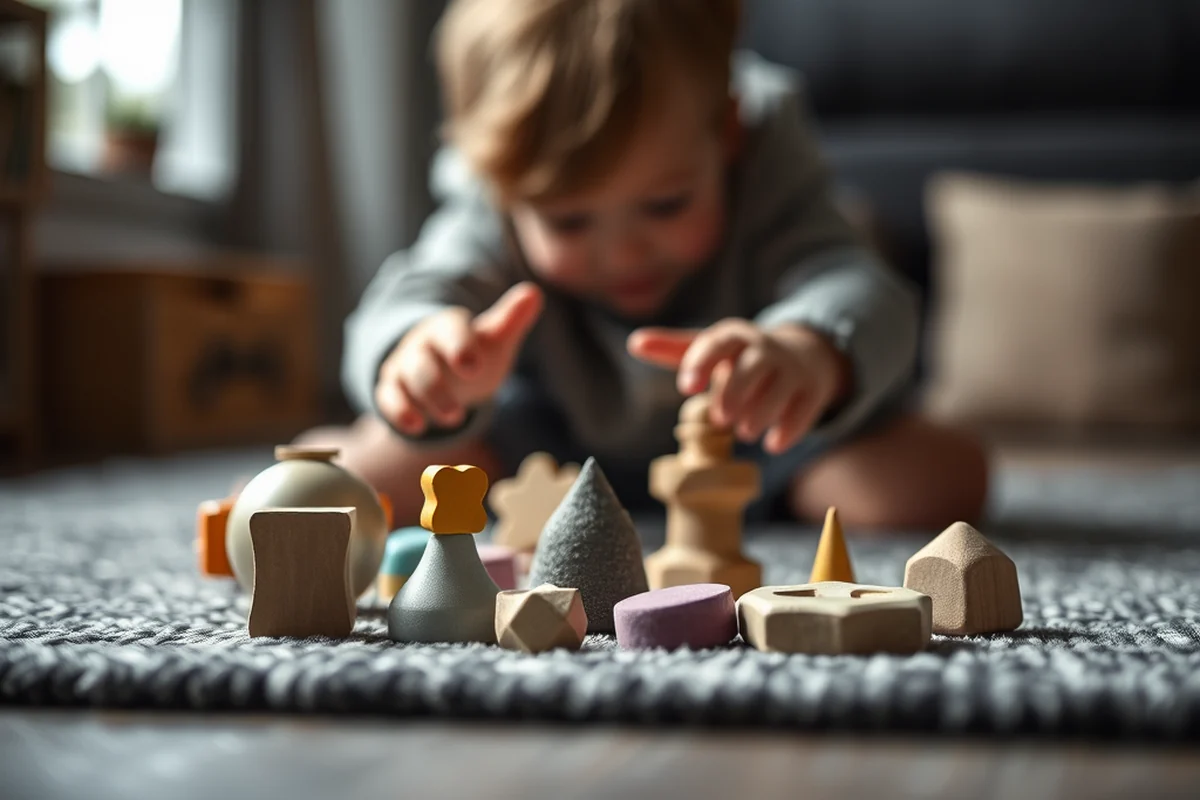
Math doesn't have to be intimidating — it can be a fun, interactive experience that happens right in your home. I've used items like buttons, beads, and even cereal to create counting games and sorting activities. For example, we've used buttons to teach one-to-one correspondence by matching buttons to numbers on a poster board. We've used cereal to teach addition and subtraction with simple equations written on paper.
We've also used a set of large, colorful number cards (I bought a set for around $5) to play number recognition games. My kids take turns picking a card and identifying the number. This has helped them recognize numbers quickly and confidently, and it's been a great way to reinforce their learning without any pressure.
Another idea is to use measuring cups and containers from the kitchen to teach volume and measurement. We've filled different containers with water or sand and asked our kids to estimate how much each one holds. This has been a great way to introduce concepts of capacity and estimation in a real-world context.
Math can be fun — and it doesn't have to cost a fortune.
Related: Play based learning indoor for beginners
Related: Play Based Learning Indoor Rainy Day Ideas Ideas
Related: Play Based Learning Indoor Rainy Day Ideas Printable
Related: Play Based Learning Indoor Rainy Day Ideas Guide
Use Storytelling to Encourage Creativity and Language Development
Storytelling is one of the most versatile and affordable ways to engage children on a rainy day. I've used simple props like stuffed animals, blankets, and cardboard boxes to create imaginative story settings. My kids love coming up with their own stories, and I often act as the narrator while they create the plot. This has helped them develop their language skills, improve their listening abilities, and encourage creative thinking.
I've also used a large, soft pillow as a 'story cushion' and asked my kids to sit on it while we read books together. We take turns reading lines from the story, and it's been a great way to reinforce reading comprehension and build confidence in their communication skills. We've even made up our own stories using characters from their favorite books, which has been a hit with both the kids and me.
Another idea is to create a 'storytelling corner' in your home with a few soft blankets and a small rug. This space can be used for both reading and creating stories together. It's a cozy, inviting place that encourages both independent and interactive learning.
When storytelling, encourage your child to contribute to the plot. Ask open-ended questions like, 'What happens next?' or 'What would you do in this situation?' This helps build critical thinking and creative problem-solving skills.
“Rainy days are a golden opportunity for parents to transform indoor spaces into dynamic learning environments.”— Playschooled editors
Related: Play based learning indoor printable
Build a Fort or Tent for Pretend Play
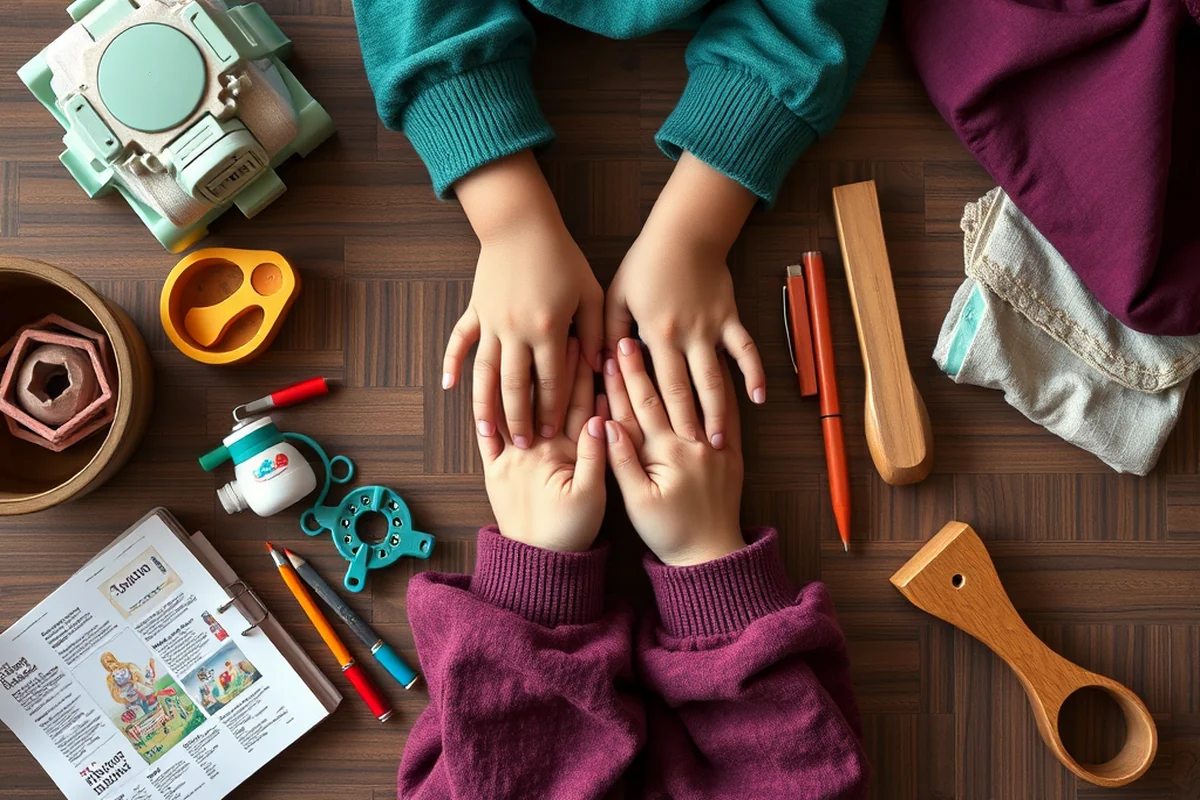
Pretend play is one of the most powerful tools for learning, and building a fort or tent is a great way to encourage it. I've used blankets, pillows, and even cardboard boxes to create a cozy, enclosed space where my kids can act out stories, play dress-up, or explore different scenarios. These forts have become a favorite part of our rainy day activities, and they've provided countless hours of entertainment and learning.
I've used a large sheet to make a simple tent by draping it over two chairs and securing it with clips. We've added pillows for seating and a blanket for a ceiling, and it's been a hit with my kids. They love pretending to be explorers, astronauts, or even chefs — and each scenario helps them develop different skills, from problem-solving to social interaction.
Another fun variation is to use a cardboard box to create a mini stage or costume booth. My kids love dressing up and putting on their own little plays, and it's a great way to encourage creativity and self-expression. It's also a low-cost way to keep them engaged for hours, even on the most boring of days.
Related: Quick play based learning indoor
Use Art to Encourage Self-Expression and Fine Motor Skills
Art activities are a great way to keep kids engaged on a rainy day, and they can be done with very few materials. I've used paper plates, construction paper, and even old magazines to create fun, hands-on art projects. My kids love using markers, crayons, and glue to create their own masterpieces, and I've noticed that their fine motor skills have improved significantly over time.
One of our favorite activities is making a collage using magazine cutouts and glue. We've used this to teach color recognition and basic design skills. We've also used pipe cleaners to create fun shapes and patterns, which has helped my kids develop their hand-eye coordination and dexterity.
Another idea is to use a large piece of paper and let your child use their fingers to paint with washable, non-toxic paint. This is a great way to encourage creativity and self-expression, and it's also a fun way to get messy without worrying about cleaning up later.
🌧️ Gentle Rainy Day Learning
For parents who want a slow-paced, low-stimulation approach to rainy day learning that focuses on calm, sensory-based activities.
⚡ Fast-Track Learning
For parents looking for quick, high-energy activities that can be set up and finished in a matter of minutes.
🧳 Travel/away-from-home Learning
For parents who need to keep kids engaged on rainy days while on the go, using simple, portable materials that can be used in any location.
👶 Learning for Multiples
For parents with more than one child, offering activities that can be adapted to different age groups and learning levels.
🔄 Regression Reset
For parents looking to use rainy days as a chance to revisit and reinforce previously learned skills, especially after a break or setback.
| The mistake | Why it happens | The fix |
|---|---|---|
| Using too many materials at once | This can overwhelm your child and make the activity feel chaotic, which can reduce their engagement and learning outcomes. | Start with a few key materials and gradually introduce more as your child becomes more comfortable with the activity. |
| Not allowing enough time for the activity | Some activities require more time to fully engage your child and allow them to explore and learn at their own pace. | Give your child ample time to explore the activity and avoid rushing them through the process. |
| Not adapting activities to your child's age and interests | If the activity is not aligned with your child's developmental stage or interests, they may lose interest quickly. | Tailor the activity to your child's age and interests. For example, older children may enjoy more complex activities, while younger children may enjoy sensory-based play. |
| Forcing the child to complete the activity | Forcing your child to complete an activity can make them feel pressured and reduce their engagement and enjoyment. | Encourage your child to participate but allow them to take the lead. Let them decide how they want to engage with the activity. |
Related: Play based learning rainy checklist
Affordable Play Based Learning Indoor Rainy Day Ideas
Related: Play based learning indoor on a budget
Common Questions
What if I don't have access to many materials at home?
How long do these activities typically take to set up?
Are these activities suitable for all age groups?
How do I ensure my child stays focused during these activities?
References
- California Preschool Learning Foundations (Volume 3) (cde.ca.gov)
Cite this guide
Playschooled (2026). Affordable Play Based Learning Indoor Rainy Day Ideas. https://playschooled.com/affordable-play-based-learning-indoor-rainy-day-ideas/
Feel free to cite or share this guide.