
Adult Learning Theory
📖 Table of Contents
I remember the moment my daughter asked me, 'Why do I have to learn this the hard way?' It was during a math lesson that felt more like a battle than a breakthrough. That question stuck with me, and it led me to explore adult learning theory — a framework that not only reshaped how I taught her but also how I learned myself. I had always assumed that children needed to be taught in a certain way, but I was wrong. Adult learning theory, with its emphasis on self-direction and relevance, turned out to be a game-changer for both of us.[4]
The more I read about adult learning theory, the more I realized how deeply it applies to parenting. It’s not just about education; it’s about respect, intention, and a recognition that every learner — including children — has their own pace, context, and motivations. For years, I’d been trying to force learning into my child’s schedule, and it was exhausting for both of us. But when I applied the principles of adult learning theory, I saw a shift. She became more curious, more engaged, and more willing to take ownership of her learning.
What struck me most was how much this theory resonated with my own experience as a learner. I had always thought that learning was something that happened in classrooms, but adult learning theory taught me that it’s everywhere — in conversations, in mistakes, and in the small moments of daily life. I began to see my child not as a passive recipient of knowledge but as an active participant in her own education. That realization changed everything.
Why You'll Love This Approach
- Fosters a lifelong love of learning in your child
- Empowers your child to take ownership of their education
- Reduces frustration and resistance during learning moments
- Encourages self-directed exploration and curiosity
Understanding the Core Principles
As of October 2026, at the heart of adult learning theory is the idea that learning is most effective when it is self-directed and relevant to the learner's life. This means that for children, learning should be connected to their interests and experiences. I noticed a dramatic shift when I stopped forcing my daughter to study math and instead let her explore it through games and real-life problems, like calculating how many cookies we could share with her friends.[1]
Another key principle is that motivation is internal. Children are more likely to learn when they feel that what they're learning has a purpose. I remember when my daughter asked, 'Why do I need to learn fractions?' I realized that I hadn’t made the connection between math and her interests. When I showed her how to split pizza slices evenly among her friends, her eyes lit up — and so did her understanding.
Adult learning theory also emphasizes the importance of respect for the learner's experience. For children, this means acknowledging their knowledge and building on it. When my daughter told me that she knew how to count to 100, I didn’t dismiss her. Instead, I asked her to teach me — and that experience deepened her understanding and made her feel proud of her progress.[2]
Use everyday situations like cooking, shopping, or playing to teach math and literacy concepts. This helps make learning relevant and engaging for your child.
Part of our Play based learning by age stage guide.
The Power of Self-Direction
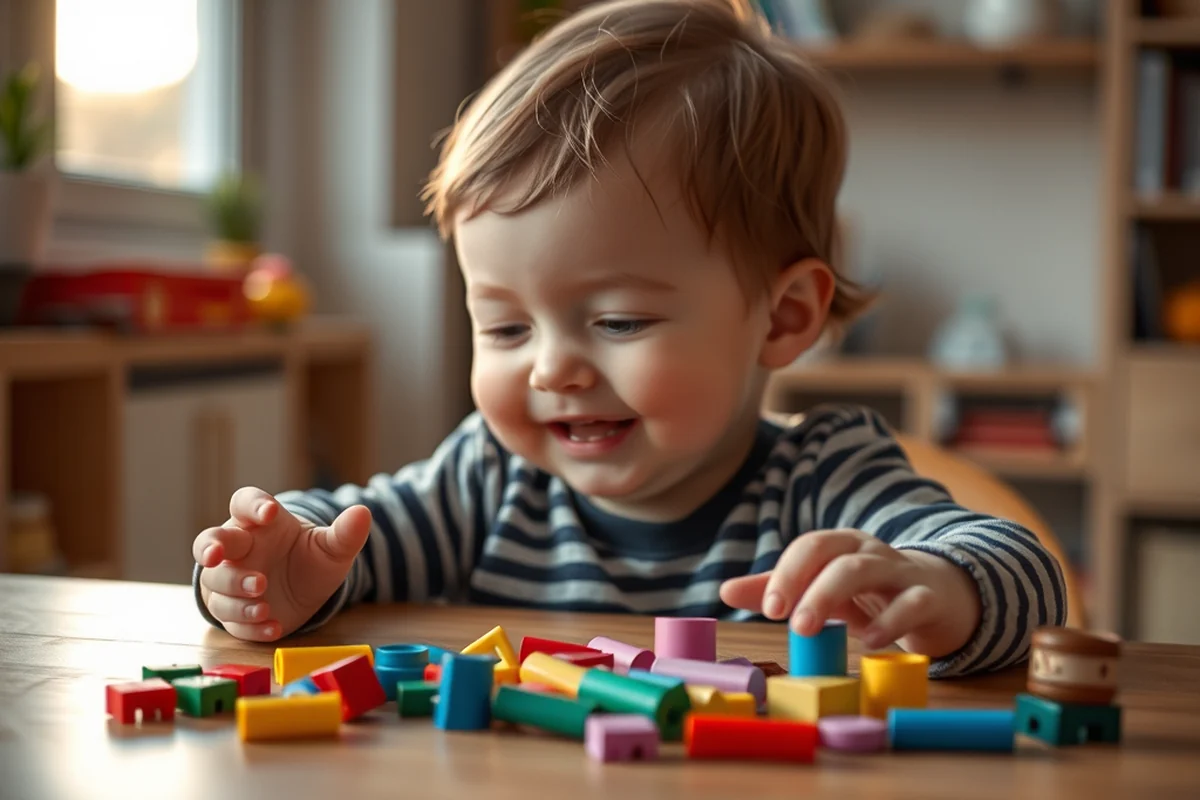
Self-direction is one of the most powerful aspects of adult learning theory. When children are given the freedom to choose what and how they learn, they are more motivated and more likely to retain the information. I found this to be true when I let my daughter pick the books she wanted to read — she became an avid reader almost overnight.
By allowing my child to set her own learning goals, I saw a huge difference in her confidence and perseverance. When she wanted to learn how to write her name, she didn’t stop until she had mastered it. This kind of autonomy is crucial for building a lifelong love of learning.
I also noticed that when I stopped micromanaging her learning process, she became more creative in her problem-solving. She started asking her own questions and seeking out answers on her own. It was a shift that I hadn’t expected but one that I was thrilled to see.
Letting your child guide the learning process can unlock incredible growth.
Related: Play based learning by age stage tips
Making Learning Relevant
When learning is relevant to a child's life, they are more likely to engage with it. I remember when my daughter struggled with memorizing multiplication tables. I realized that I had been using a method that didn’t make sense to her. When I connected the tables to real-life situations, like calculating how many toys we could buy with a certain amount of money, her understanding improved dramatically.
Relevance also means that learning should be tied to the child's interests. If your child loves animals, use that interest to teach science and math. If they love art, use that to teach history and geography. This approach not only makes learning more engaging but also helps the child see the value in what they're learning.
I’ve found that making learning relevant is not just about connecting it to their interests, but also to their future goals. When my daughter told me she wanted to be a veterinarian, I started incorporating lessons about biology and math into our conversations. It made learning more meaningful for her and helped her see the path ahead.
If your child loves dinosaurs, use that to teach history, science, and even math. This approach makes learning fun and meaningful.
“I remember the moment my daughter asked me, 'Why do I have to learn this the hard way?' It was during a math lesson that…”— Playschooled editors
Related: Quick play based learning stage
Building Motivation Through Autonomy

Autonomy is about giving children the freedom to make choices in their learning. When my daughter was learning to read, I noticed that she was more motivated when she could choose the books she wanted to read. This autonomy not only increased her engagement but also helped her take ownership of her progress.
I also found that giving my daughter the freedom to decide how she wanted to approach a task, like solving a math problem or writing a story, made a huge difference in her confidence. She felt more in control and was more willing to take risks and try new things.
By allowing my child to set the pace of her learning, I saw a shift in her attitude. She became more persistent in the face of challenges and more willing to seek help when needed. This kind of motivation is essential for long-term success in learning.
Related: Play based learning stage examples
The Role of Experience in Learning
Experience is a key component of adult learning theory, and it’s something that children naturally have. When I stopped trying to teach my daughter through lectures and started incorporating hands-on experiences into her learning, I saw a significant improvement in her understanding and retention of concepts.
I remember when we were learning about plants. Instead of just reading about photosynthesis, we planted our own garden. My daughter was fascinated by the process and asked endless questions about how the plants grew. This kind of experiential learning made the concepts more tangible and easier to grasp.
I’ve also noticed that when my daughter has the opportunity to apply what she’s learned in real life, she remembers it better. Whether it was learning about measurements by cooking together or using geometry to build a fort, these experiences made learning more meaningful and lasting.
Related: Budget play based learning by age stage
The Impact of Respect in Learning
Respect is a core principle of adult learning theory, and it’s something that I’ve come to realize is just as important for children. When I started treating my daughter as an active participant in her learning rather than a passive recipient of knowledge, I saw a shift in her attitude and engagement.
Respecting my daughter’s experience and knowledge made her feel valued and more willing to take ownership of her learning. I remember when she told me she already knew how to count to 100. Instead of dismissing her, I asked her to teach me — and that experience deepened her understanding and made her feel proud of her progress.[3]
I’ve also noticed that when I show respect for my daughter’s learning process, she’s more likely to be open to feedback and more willing to try new things. This kind of respect creates a safe and supportive environment for learning and growth.
Respect is the foundation of effective learning — for both adults and children.
Related: Simple play based learning stage
Encouraging Reflection and Feedback
Reflection is a key part of adult learning theory, and it’s something that can be incredibly valuable for children as well. When I started encouraging my daughter to reflect on her learning experiences, I saw a shift in her approach to challenges and mistakes.
I noticed that when my daughter reflected on her progress, she was more aware of her strengths and areas for improvement. This self-awareness helped her take a more proactive approach to learning and made her more motivated to continue growing.
Feedback is also an essential part of the learning process. When I started providing my daughter with constructive feedback in a supportive way, she became more open to learning from her mistakes. I’ve found that when feedback is framed as a tool for growth rather than criticism, it can be incredibly powerful in helping children develop resilience and a growth mindset.
🌱 Gentle Approach
Focuses on slow, deliberate learning with plenty of time for reflection and exploration.
🚀 Fast-Track Method
Uses structured, time-bound activities to accelerate learning and build confidence quickly.
✈️ Travel/Remote Learning
Adapts learning to fit the rhythms of travel, using location-based experiences and spontaneous learning moments.
👯♀️ Multiples Approach
Tailors learning to multiple children, encouraging peer teaching and shared exploration.
🔄 Regression Reset
Focuses on revisiting and reinforcing foundational skills when a child is struggling with new concepts.
| The mistake | Why it happens | The fix |
|---|---|---|
| Forcing learning into a rigid schedule | This can lead to frustration and resistance in your child, making learning feel like a chore rather than a joy. | Instead, allow your child to set the pace of their learning and explore topics in their own way. |
| Ignoring your child’s interests | Learning is more effective when it’s connected to what a child cares about and finds meaningful. | Use your child’s interests as a foundation for learning and build on them to make learning more engaging. |
| Not allowing autonomy | When children are not given the freedom to make choices in their learning, they may become disengaged and less motivated. | Encourage your child to take ownership of their learning by letting them choose what they want to explore and how they want to approach it. |
| Focusing too much on mistakes and not enough on progress | Constantly emphasizing mistakes can lead to a fear of failure and a lack of confidence in your child’s learning journey. | Use reflection and feedback to help your child understand mistakes as part of the learning process, rather than as failures. |
Adult Learning Theory
Common Questions
How can I apply adult learning theory to my child’s education at home?
What if my child doesn’t seem interested in learning?
How can I make learning more relevant to my child’s life?
What if my child is struggling with a particular concept?
References
- Adult Learning Theory & Your College Journey (bryantstratton.edu)
- Adult Learning Principles | CDC (cdc.gov)
- Module 6 - Learning Theories & Strategies (communitycolleges.wy.edu)
- Adult Education Preconditions and Program Standards (docs.ctc.ca.gov)
Cite this guide
Playschooled (2026). Adult Learning Theory. https://playschooled.com/adult-learning-theory/
Feel free to cite or share this guide.