Play-based Learning Ideas Without Tools
📖 Table of Contents
There was a time when I thought play-based learning meant buying expensive kits or spending hours researching educational games. I was wrong. One afternoon, while my toddler was stacking mismatched blocks on the kitchen counter, I realized that learning doesn't always need tools. It can happen in the most ordinary moments — and those moments are often the most meaningful. That’s how I began to see play-based learning ideas without tools not as a limitation, but as an opportunity to be creative, resourceful, and present with my child.[1]
I used to believe that play-based learning required elaborate setups or specific materials. But then I noticed how my daughter turned a cardboard box into a spaceship, or how she used a spoon to sort pebbles from the sandbox. These were learning moments — about physics, categorization, and imagination. The key was to stop looking for 'perfect' tools and start observing how play could naturally lead to discovery. It’s not about replacing tools; it’s about using what you have to create learning experiences that are deeply personal and deeply engaging.[2]
Play-based learning ideas without tools are not only accessible, they’re often more powerful. When you remove the need for specific materials, you open the door for creativity, adaptability, and learning that’s tailored to your child’s unique interests. My toddler didn’t need a science kit to explore gravity — she just needed a ball and a staircase. The absence of tools doesn’t limit learning; it expands it. And that’s something I’ve come to love.[3]
Why You'll Love This Approach to Play-Based Learning
- You can learn and grow with your child using nothing but your imagination and what you have at home.
- It’s budget-friendly, eco-conscious, and eliminates the pressure of buying 'perfect' educational materials.
- It encourages creativity, problem-solving, and deep engagement through hands-on, real-world exploration.
- It helps you and your child connect more deeply by focusing on play and discovery over structured lessons.
How to Use Everyday Objects to Spark Curiosity
As of September 2026, I’ve found that household items — like spoons, socks, or even a bottle cap — can be transformed into learning tools. My toddler used a spoon to dig through a pile of sand, learning about texture and depth. I turned a stack of socks into a sorting game, helping her understand patterns and categorization. These objects didn’t cost anything, but they sparked a lot of curiosity and learning.[4]
One of my favorite moments happened when I took a bunch of old buttons and asked my daughter to sort them by color. She didn’t just sort them — she created a rainbow, discussed which colors were 'best' for different things, and even tried making a necklace. It was a simple activity, but it led to rich learning and a lot of joy.[5]
The beauty of using everyday objects is that they’re always available. You don’t need to wait for a specific toy or tool — just look around your home and see what your child can explore. You might find that the most ordinary items become the most powerful tools for learning.
Take a pan, fill it with water, and add a few tablespoons of food coloring. Let your child use a spoon to mix the colors, observe how they blend, and even create patterns with their fingers. This is a simple way to introduce concepts like mixing, color theory, and sensory exploration.
Part of our Play based learning guide.
The Power of Imagination in Play-Based Learning
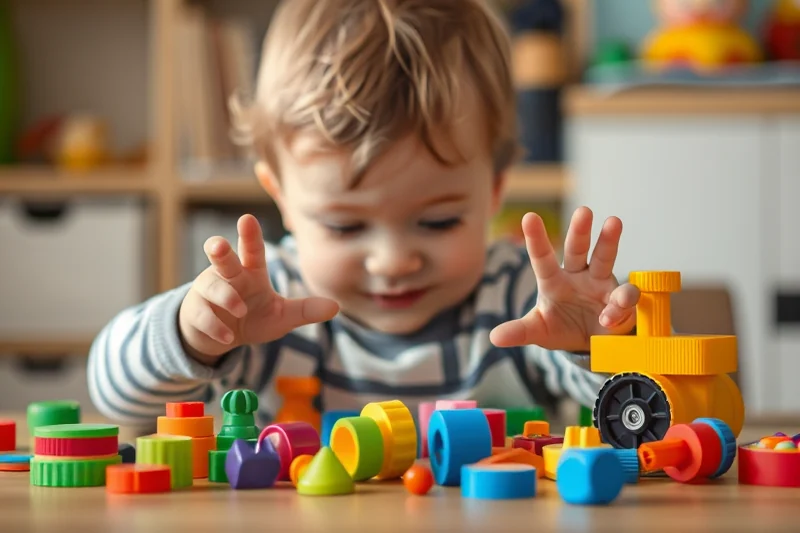
I used to think that imagination was a bonus, not a core component of play-based learning. But then I watched my daughter turn a cardboard box into a spaceship, a fort, and even a bakery. Each time, she was learning about storytelling, spatial awareness, and problem-solving — all through her imagination.
One day, I noticed her pretending to cook with a stick and a rock. I didn’t correct her — I joined her. We pretended to make a 'magic cake' and discussed the ingredients we would use. It was silly, but it was also a way for her to explore concepts like ingredients, cooking, and even fractions (when we 'measured' in imaginary spoons).
Imagination doesn’t require tools — it just requires space, time, and a willingness to let your child lead the way. When I stop trying to control the play and start observing, I see how much learning happens through pure creativity.
Imagination is the most powerful learning tool in a child’s hands — and it requires no materials.
Related: What is learning express toys
How to Incorporate Nature into Play-Based Learning
I never realized how much learning could happen outdoors until I started taking my daughter to the park every day. She would run through the grass, pick up leaves, and try to sort them by shape and color. It was like she was learning about biology and classification without any books or tools.
One of my favorite activities was to bring a magnifying glass from home and use it to look at bugs, rocks, and even the texture of bark. She would ask questions like, 'Why is this bug so small?' or 'What makes this leaf green?' These questions led to real learning — about insects, plants, and even the environment.
Nature doesn’t need any tools — it’s already here. All you need is a bit of curiosity, a willingness to explore, and the time to watch your child discover the world around them.
Pack a small basket or bag and go on a walk with your child. Let them collect interesting objects like leaves, rocks, or pinecones. Back home, you can sort them, describe their features, and even make a simple collage. This is a hands-on way to explore nature and develop observational skills.
“There was a time when I thought play-based learning meant buying expensive kits or spending hours researching educational games.”— Playschooled editors
Related: Play to earn
How to Use Body Play for Learning
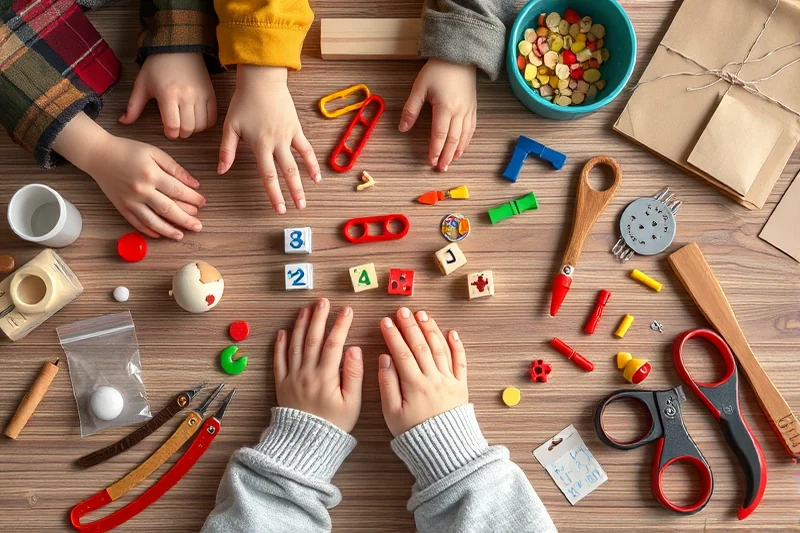
I used to think that body play was just for fun — but then I realized how much learning my daughter was doing while jumping, dancing, and even pretending to be an animal. She was developing gross motor skills, learning about balance, and even practicing counting as we jumped together.
One of the most effective body play activities was when we played 'Red Light, Green Light.' She was learning about following directions, stopping, and waiting — all while having a great time. It was surprising how much she learned through just a simple game that didn’t require any tools or equipment.
Body play is one of the most accessible forms of play-based learning. It doesn’t require any tools, and it can be done anywhere — in the living room, the park, or even in the kitchen. It’s a way to make learning physical, active, and engaging.
Related: Project based learning
The Role of Music and Rhythm in Play-Based Learning
I used to think that music was just for fun, but then I noticed how my daughter started clapping to the beat and even trying to mimic songs. It turned out that music was helping her develop rhythm, coordination, and even language skills — all through simple play.
One of the best ways we used music was by singing along to songs and making up our own. We would create a 'dance party' in the living room and use our bodies to move to the beat. It was not only fun, but it also helped her understand rhythm and timing.
Music doesn’t require any tools — just a voice, a song, or even a drum you can make from a cardboard box. It’s a way to bring joy, movement, and learning into your child’s day without any extra materials.
⭐ Classic
Use whole wheat flour and water to create a basic sensory play dough.
💰 Budget
Replace the whole wheat flour with cornstarch and use water for a low-cost alternative.
⚡ Extra-Fast
Skip the baking and use the dough as is for a quick sensory activity.
✨ Depth
Add food coloring and use different textures to create a layered learning experience.
🥗 Light
Use whole wheat flour and water for a low-calorie, healthy sensory play option.
| The mistake | Why it happens | The fix |
|---|---|---|
| Assuming that play-based learning requires expensive tools or kits. | This can limit your creativity and prevent you from exploring what’s already available in your home or environment. | Embrace what you have — even simple items like paper, water, or nature objects can be powerful learning tools. |
| Trying to force learning into play without allowing your child to take the lead. | Children learn best when they are engaged and interested. Forcing learning can make the experience feel more like a lesson than a game. | Let your child choose the activity and guide the play — this increases engagement and makes learning more natural. |
| Not being present or participating in the play. | Children learn through interaction, and your presence is a powerful tool for learning and development. | Be fully present — ask questions, join in the play, and explore the world with your child. |
| Overlooking the value of body play or sensory exploration. | These activities are often dismissed as just 'fun,' but they are essential for developing motor skills, coordination, and sensory awareness. | Incorporate body play and sensory exploration into your routine — they are valuable forms of play-based learning that don’t require any tools. |
Related: Play to learn preschool
Play-based Learning Ideas Without Tools
Related: What is learning through play
Common Questions
Do I need any special materials for play-based learning without tools?
How can I keep my child engaged if we don’t have any special toys?
What if my child is too young for structured learning?
Can I still use this approach if I’m not very creative?
References
- PDF The Powerful Role of Play in Early Education (cde.ca.gov)
- Play-Based Learning (education.mn.gov)
- PDF Developing an Observational Tool to Support Play-Based Teaching (files.eric.ed.gov)
- Play-Based Learning - New York State Education Department (nysed.gov)
- Improving Motor Skills in Early Childhood through Goal-Oriented Play ... (pmc.ncbi.nlm.nih.gov)
Cite this guide
Playschooled (2026). Play-based Learning Ideas Without Tools. https://playschooled.com/play-based-learning-ideas-without-tools/
Feel free to cite or share this guide.