
Best Play-Based Learning Phases and How They Support Child Development

📖 Table of Contents
When my daughter turned two, I noticed a shift in how she interacted with the world. She no longer just played with her toys — she built towers, sorted shapes, and negotiated turn-taking with a level of understanding I hadn’t anticipated. It wasn’t until I read about the ‘best play-based learning phases’ that I realized this was exactly how early childhood development is meant to unfold. Those phases are not just random stages; they’re carefully timed windows of opportunity that help kids build skills in ways that feel natural, not forced.[3]
I spent weeks observing my daughter during these moments, noting how she used blocks to count, how she mimicked real-life scenarios with her dolls, and how she solved puzzles on her own. It was fascinating to see how her brain was developing through play — a process that felt effortless to her but was building critical thinking, language, and social skills. The more I learned about the ‘best play-based learning phases,’ the more I saw them as a blueprint for raising curious, confident, and capable children.[4]
The key to unlocking these phases lies in understanding the developmental milestones they support. Whether it’s the sensory-rich play of infancy or the imaginative role-play of preschool, each stage offers unique benefits. By recognizing these phases, I felt more equipped to support my child’s learning without overwhelming her. It was a revelation — and it changed the way I approached every moment of her early life.
Why You'll Love This Approach to Play-Based Learning
- It aligns with natural developmental curves, reducing frustration and enhancing retention.
- It fosters creativity and critical thinking through unstructured exploration.
- It allows you to engage with your child in a way that feels joyful, not instructional.
- It helps you identify and celebrate milestones as they happen.
The Magic of the Sensory Phase (0–6 Months)
As of November 2026, During the first six months of life, babies are in what I call the ‘sensory phase.’ This is when they learn about the world by exploring textures, colors. Sounds — and it’s all happening without words. I remember the first time my daughter grabbed a soft, textured toy and brought it to her mouth; it was like watching her brain light up as she discovered what it felt like to touch and taste the same object.
This phase is essential for developing motor skills, hand-eye coordination, and cognitive awareness. Simple activities, like placing a variety of soft toys around her, helped her learn to reach, grasp, and bring objects to her mouth — all critical skills for later development. I used a few different materials, like silky fabrics, rubbery toys, and wooden blocks, and noticed how she reacted differently to each one.
The key takeaway here is that you don’t need to overthink it. Just provide a safe, varied environment where your baby can explore. I learned that even a few minutes of focused play in this phase can lead to measurable developmental gains later on.
Opt for toys made from natural materials like wood, rubber, or fabric. Avoid anything with small parts or harsh chemicals. A few high-quality items can be rotated for variety.
Part of our Play based learning troubleshooting phases guide.
The Mirror Phase (6–12 Months)
Around six months, I noticed my daughter starting to recognize herself in the mirror. She’d laugh, point, and even try to touch her reflection — a behavior that was both amusing and developmentally significant. This is the ‘mirror phase,’ where babies begin to understand that their reflection is them, and it’s a key step toward self-awareness.
During this phase, I made a point to place mirrors in her play area and even used a small handheld mirror to help her explore. She’d look at herself, then at me, and then back at the mirror — it was like she was learning to connect her own identity with her surroundings. This phase also helps with motor development, as she learns to reach, touch, and manipulate objects while looking at her reflection.
To support this phase, I kept a few mirrors around the house and made sure they were placed at her eye level. This simple step helped her understand spatial relationships and built the foundation for self-awareness.
A mirror in her play area opened a world of self-discovery.
Related: Play based learning phases mistakes to avoid
The Imagination Phase (12–18 Months)
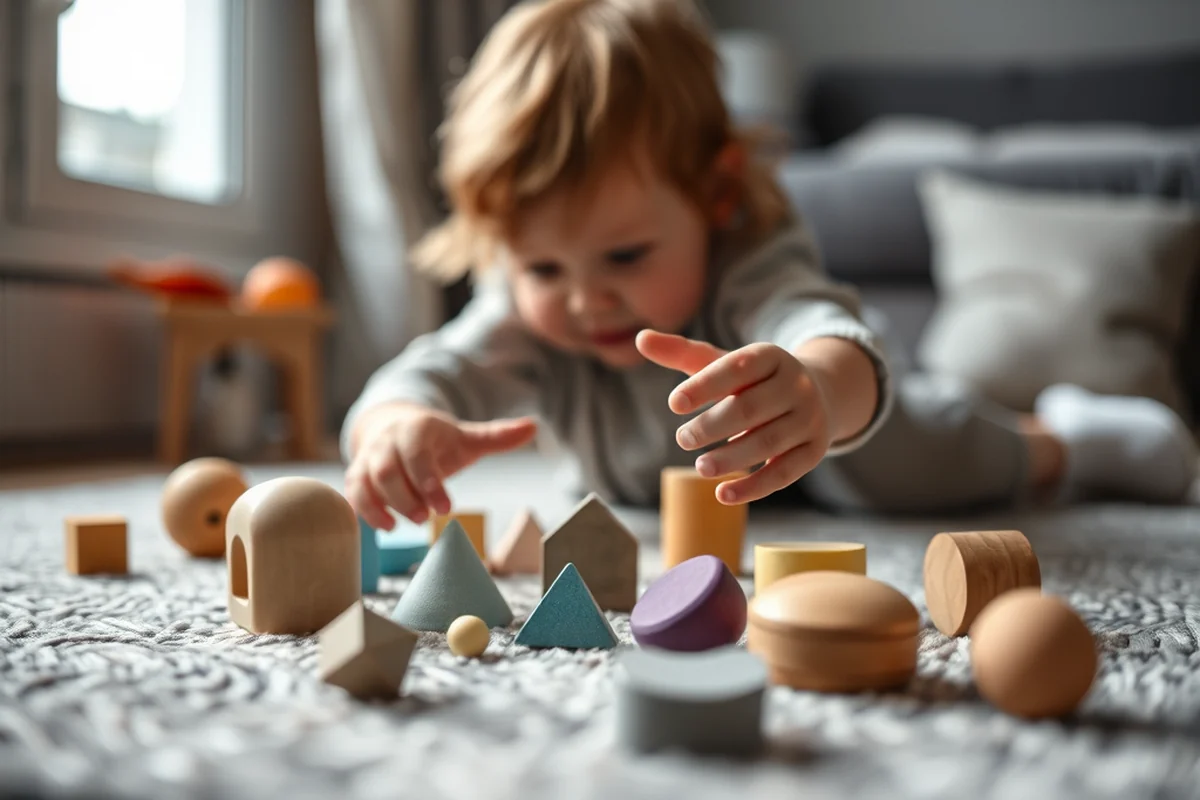
At 14 months, my daughter started pretending that her blocks were phones, that her stuffed animals were going on adventures, and that she was cooking dinner — even though she had no idea what that meant. This is the ‘imagination phase,’ where toddlers begin to think symbolically and pretend to be someone else.[1]
During this time, I noticed a huge jump in her language skills. She started using more words, and she’d repeat phrases she heard from TV shows or family members. Pretend play helped her build vocabulary, as well as empathy, since she was now pretending to be different characters with different needs.
I made a point to encourage her imagination by setting up a play kitchen, giving her dolls, and letting her play with costumes. It didn’t take much — just a few simple props — but it had a huge impact on her development.
Choose props that can be used in multiple ways — like a dollhouse, a play kitchen, or a set of costumes. These encourage creativity and longer engagement.
“When my daughter turned two, I noticed a shift in how she interacted with the world.”— Playschooled editors
Related: Budget play based learning phases
The Construction Phase (18–24 Months)
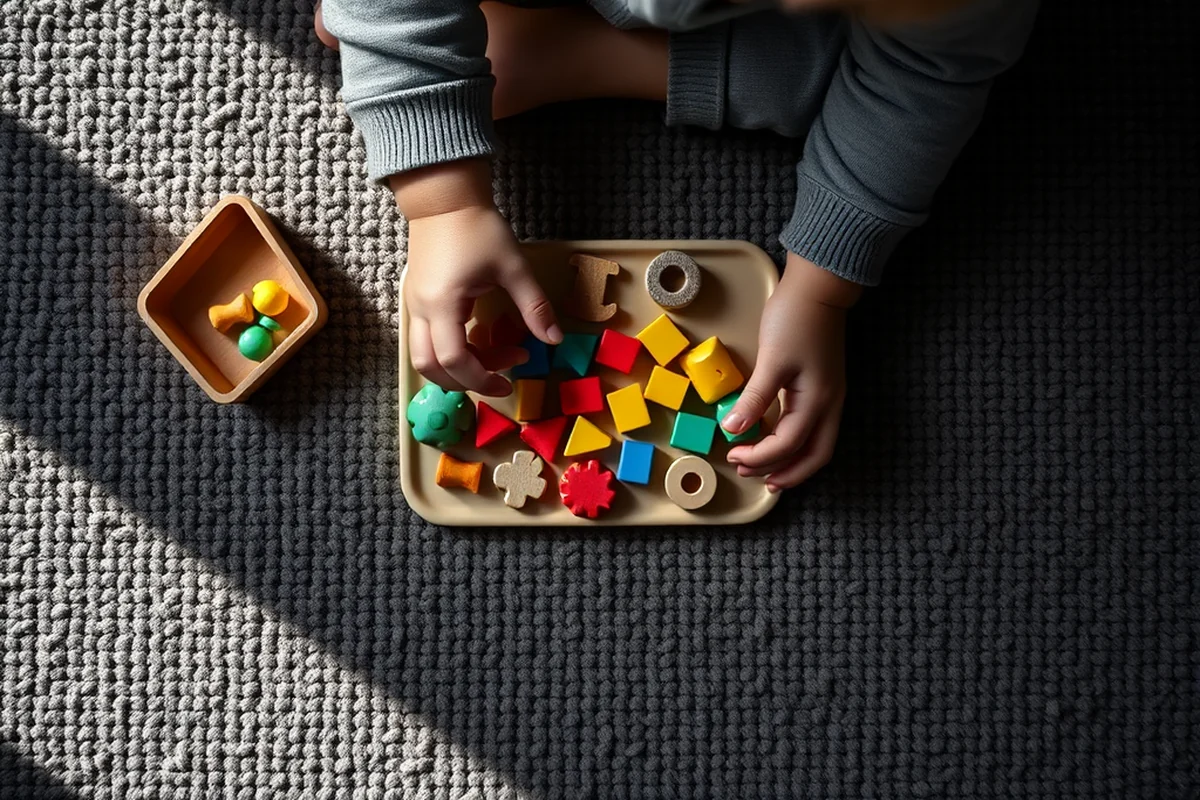
Around 18 months, my daughter started stacking blocks, sorting shapes, and even building small towers. This was the ‘construction phase,’ and it was fascinating to watch her figure out how to balance the blocks or fit the shapes into the right holes.[2]
This phase is all about spatial awareness and hand-eye coordination. I noticed that as she built more complex structures, she became more confident in her abilities. She’d get frustrated when a tower toppled, but she’d keep trying — it was like a mini-lesson in perseverance.
To support this phase, I invested in a few different building sets — blocks, stacking cups, and shape sorters. I didn’t overdo it, but just a few well-chosen toys made a big difference in her development.
Related: Budget play based learning troubleshooting
The Social Play Phase (2–3 Years)
At two years old, my daughter started playing with other kids at the park — and it was a revelation to see how she interacted with them. She’d share toys, take turns, and even resolve small conflicts on her own. This was the ‘social play phase,’ and it was a critical step in her development.
During this phase, I noticed her language skills improving even more. She was now using full sentences, asking questions, and even negotiating with her peers. I made sure to let her play with other kids as often as possible — even if it meant waiting for her to be ready for group play.
To support this phase, I created opportunities for her to play with other children — whether at the park, at playdates, or at preschool. This was the first time I saw her really start to understand the rules of social interaction.
Related: Play based learning troubleshooting guide
The Role-Play Phase (3–5 Years)
At three years old, my daughter started pretending to be a teacher, a doctor, and even a superhero. She’d create elaborate stories, assign roles to her dolls, and even write her own simple scripts. This was the ‘role-play phase,’ and it was a huge development milestone.
This phase helped her build empathy, as she now put herself in the shoes of different characters — a doctor, a teacher, a parent, or even a friend. I saw her using language in more complex ways, creating narratives, and even resolving conflicts in her pretend scenarios.
To support this phase, I made sure she had access to a wide range of costumes, props, and even a small puppet stage. It didn’t take much — just a few items — but it helped her explore the world in new ways.
Role-play turned her into a storyteller, a problem-solver, and an empathetic child.
Related: Quick play based learning troubleshooting
The Creative Phase (5–7 Years)
At five years old, my daughter began creating her own art, writing stories, and even composing simple songs. This was the ‘creative phase,’ where she was now using her imagination in more complex ways than ever before.
This phase was important for building emotional regulation skills, as she learned to express herself through different mediums. I noticed her becoming more confident in her creative output and taking pride in her work. She’d even ask for feedback — a huge sign of self-awareness and confidence.
To support this phase, I provided her with access to drawing materials, writing tools, and even simple musical instruments. I made sure she had a dedicated space for her creative projects — and I made it clear that I valued her work, no matter how messy or simple it was.
🌿 Gentle Play Approach
For parents who prefer a slow, low-pressure approach to learning — focusing on observation and gradual engagement.
🚀 Fast-Track Play Approach
For parents who want to maximize learning in a short time — using focused, structured play sessions with clear goals.
🧳 Travel/away-from-home Play Approach
For families on the go — using simple, portable play items that can be used anywhere, from the car to the hotel.
👶 Multiples Play Approach
For parents with more than one child — using play strategies that allow for individual and group learning, even with siblings.
🔄 Regression Reset Play Approach
For parents who want to re-engage their child after a developmental pause — using targeted play to rebuild lost skills or confidence.
| The mistake | Why it happens | The fix |
|---|---|---|
| Forcing a phase before your child is ready. | Children develop at their own pace, and forcing a phase can lead to frustration and resistance. | Observe your child’s interests and wait for them to show readiness before introducing new activities. |
| Neglecting to provide a variety of materials for exploration. | Limited materials can restrict your child’s learning potential and prevent them from developing key skills. | Rotate a few high-quality play items regularly to keep your child engaged and curious. |
| Over-relying on screens during play time. | Screen time can limit hands-on exploration and hinder the development of fine motor and social skills. | Use screens only occasionally and prioritize hands-on, interactive play for learning. |
| Ignoring the emotional aspect of play. | Play is not just about skills — it's also about emotional regulation, creativity, and connection. | Make sure to engage with your child during play, celebrate their efforts, and allow them to express themselves freely. |
Best Play-based Learning Phases
Common Questions
How do I know which play-based learning phase my child is in?
What if my child isn’t showing interest in the current phase?
Can I mix different phases of play together?
Is it possible to overdo play-based learning?
References
Cite this guide
Playschooled (2026). Best Play-Based Learning Phases and How They Support Child Development. https://playschooled.com/best-play-based-learning-phases/
Feel free to cite or share this guide.