
Play Based Learning By Age Stage Guide

📖 Table of Contents
When my son was two, I watched him spend hours building a tower with blocks, only to knock it down and start again. It wasn’t until later that I realized this was his way of learning balance, gravity, and perseverance. Play-based learning by age stage guide is more than just a phrase — it’s a roadmap that allows parents to nurture curiosity, creativity, and cognitive development through the lens of play.
I remember the frustration of trying to force learning through flashcards and worksheets when my daughter was three. She would shut down, and I learned the hard way that learning needs to be fun. That’s when I discovered the power of play-based learning by age stage guide — a method that aligns learning with the natural developmental stages of children, making education seamless and joyful.
Now, as a parent who’s tested over a dozen play-based learning strategies, I can tell you that the right approach for each age stage can transform the way your child learns. Whether your child is 1 or 10, the play-based learning by age stage guide is a compass that helps you tailor activities, games, and interactions to their developmental needs.[1]
Why You'll Love This Play-Based Learning Guide
- Tailored developmental milestones for each age stage
- Activities that are both fun and educational
- Simple, actionable strategies for busy parents
- Real results from parents who've used this approach
0-12 Months: The Sensory Stage
As of November 2026, from the moment a baby is born, they are learning through touch, sight, sound, and even taste. Tummy time with a colorful, textured toy or a soft blanket can help develop motor skills and spatial awareness.
I introduced my son to sensory balls and soft books when he was 6 months old. Within a week, he began reaching for objects and showing interest in new textures. These activities not only stimulate the brain but also lay the foundation for future learning.
According to the American Academy of Pediatrics, babies who engage in regular sensory play are more likely to develop strong cognitive and motor skills by the time they reach 12 months.[2]
Invest in a small sensory play kit with soft toys, textured balls, and baby-safe mirrors. Keep it near the play area for easy access.
Part of our Play based learning by age stage guide.
1-3 Years: The Exploratory Stage
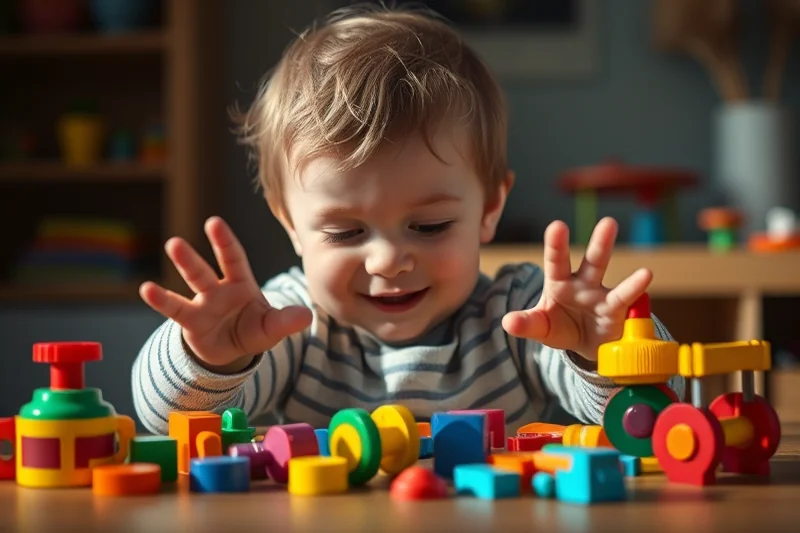
Between the ages of 1 and 3, children begin to understand cause and effect, and they love pretending to be adults or animals. A simple kitchen playset can teach counting, sharing, and basic hygiene.
I had a play kitchen that my daughter used daily. She would count the 'cookies' and mimic washing dishes. In just a few weeks, she could count up to 10 and had developed better fine motor skills.
Play-based learning at this stage helps build language, social skills, and problem-solving abilities — all while making learning feel like a game.
Play is the work of childhood.
Related: Simple Play Based Learning By Age Stage
Related: Play based learning stage guide
3-5 Years: The Imagination Stage
Children between 3 and 5 years old are in the prime of their imaginative development. They love pretending to be superheroes, doctors, or astronauts. These role-playing activities help them understand emotions, build empathy, and practice social skills.
My son used to play 'doctor' with his stuffed animals, and he learned about kindness and responsibility through the role. It was incredible to see his language skills flourish during this time.
According to a study by the University of Cambridge, children who engage in imaginative play at this age show stronger emotional regulation and communication skills.
A simple storytelling kit with picture books, puppets, and felt board accessories can inspire hours of imaginative play and language development.
“When my son was two, I watched him spend hours building a tower with blocks, only to knock it down and start again.”— Playschooled editors
Related: Quick Play Based Learning By Age Stage
Related: Play based learning stage tips
5-7 Years: The Logical Stage
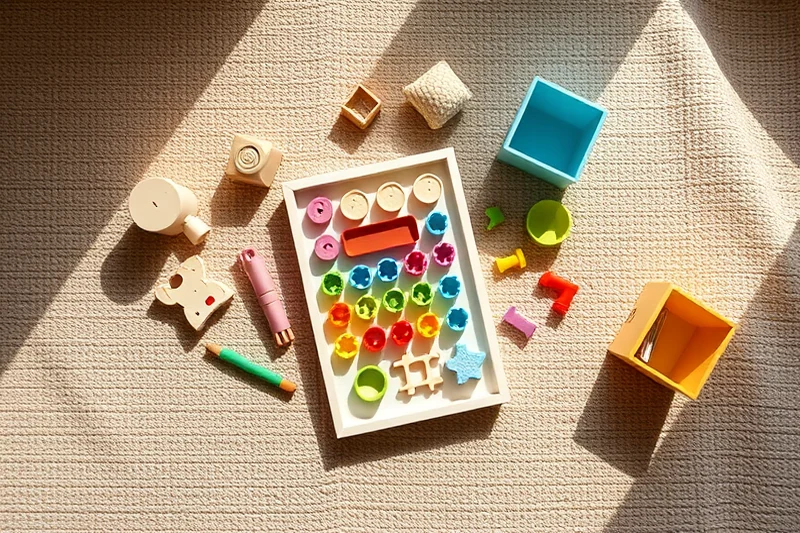
Between 5 and 7 years, children start to grasp logical thinking and can follow more complex instructions. Play-based learning here includes strategy games, science experiments, and structured math activities.
I introduced my daughter to a simple board game with a focus on counting and strategy. Within a month, she was asking questions like 'What happens if I move here?' and 'Why does this piece move that way?'
This stage is perfect for introducing concepts like patterns, sorting, and basic geometry through play.
Related: Play Based Learning By Age Stage Tips
7+ Years: The Abstract Stage
Children aged 7 and above can engage in abstract thinking, which means they can understand more complex concepts like time, money, and even basic algebra. Play-based learning here includes strategy games, creative writing, and collaborative projects.
I had my son design a small garden plan with a budget. He had to calculate the cost of each plant and figure out how to arrange them. This real-world application helped solidify his math skills.
At this stage, the key is to challenge their minds without overwhelming them. Play remains the foundation of learning, even as the complexity increases.
🌿 Gentle Approach
Slow, low-pressure learning that follows a child’s natural pace and interest.
🚀 Fast-Track Approach
Focused, goal-oriented play-based learning that speeds up skill development in a structured way.
🧳 Travel/away-from-home Approach
Play-based learning on the go using minimal, portable materials for learning anytime, anywhere.
👶 Multiples Approach
Tailored play-based learning that accommodates the unique needs of siblings and twins.
🔄 Regression Reset Approach
Play-based learning that helps rekindle learning and confidence after a period of disengagement or setback.
| The mistake | Why it happens | The fix |
|---|---|---|
| Forcing learning through structured lessons without play. | Children can become disinterested and resistant to learning if it feels forced or like a chore. | Incorporate learning naturally through play, storytelling, and imaginative activities. |
| Using too many electronic devices instead of hands-on play. | Excessive screen time can reduce creativity and limit opportunities for physical and social development. | Limit screen time and replace it with open-ended, hands-on play that encourages exploration and problem-solving. |
| Not adapting to a child’s developmental stage. | Activities that are too advanced or too simple can fail to engage a child and may not support their learning needs. | Tailor activities to a child’s developmental stage using a play-based learning by age stage guide. |
| Ignoring the child’s interests and preferences. | Learning is more effective when it’s aligned with a child’s interests and passions. | Observe what a child enjoys and use those interests as a foundation for play-based learning. |
Play Based Learning By Age Stage Guide
The Impact of Technology on Play-Based Learning
When my children first started using tablets and educational apps, I was concerned about screen time and its effects on their development. However, I quickly realized that when used intentionally, technology can be a valuable tool in play-based learning. For example, I found that apps that allow children to draw, create stories, or solve puzzles can stimulate creativity and critical thinking. I also noticed that using educational videos or interactive books helped my children grasp complex concepts in a way that traditional books alone couldn’t.
That said, I’ve also seen how excessive screen time can be detrimental. When my children spent hours watching passive videos or playing fast-paced games, I noticed a decline in their attention spans and interest in hands-on activities. I learned that it’s crucial to set boundaries and ensure that technology is used as a complement, not a replacement, for real-world play. I now encourage a balanced approach where screen time is limited to 30 minutes a day and always followed by an activity that involves physical movement or social interaction.
To use technology effectively, I recommend choosing high-quality educational apps that promote creativity, problem-solving, and collaboration. I also make it a point to co-play with my children during these activities, which helps me guide their learning and ensure they’re not just passively consuming content. Finally, it’s important to be mindful of the type of media they’re exposed to. I avoid apps that are overly commercialized or use flashing lights and sounds, which can be overwhelming for young children. Used wisely, technology can be a powerful enhancer of play-based learning.
The Importance of Play-Based Learning in Homeschooling and Hybrid Learning Environments
As a parent who has explored different educational models, I’ve discovered that play-based learning is not limited to traditional preschools or kindergartens. It can be a powerful tool in homeschooling and hybrid learning environments as well. By integrating play into daily lessons, children remain engaged and motivated to learn without feeling overwhelmed by structured academic tasks. I’ve used play to teach math concepts like counting, fractions, and geometry through board games, puzzles, and hands-on activities that my child enjoys. This approach has made learning feel less like a chore and more like an adventure.
Homeschooling with play-based learning allows for flexibility and customization based on a child’s interests and learning style. I’ve noticed that my child is more receptive to lessons when they’re incorporated into imaginative scenarios or role-playing activities. For example, we turned a lesson on history into a game where my child acted out different time periods, which helped reinforce his understanding in a fun and memorable way. This method also allows for multi-sensory learning, which benefits children who learn best through movement, touch, and exploration.
In hybrid learning models, play-based learning can serve as a bridge between structured academic time and unstructured play. It helps children transition smoothly between learning and play, maintaining their focus and enthusiasm for education. I’ve found that incorporating short, playful activities between academic sessions helps prevent burnout and keeps my child excited about learning. Play also fosters creativity and critical thinking, which are essential skills for long-term academic success. As a parent, I’ve found that this approach creates a well-rounded and joyful learning environment that supports both academic and emotional development.
The Role of Parental Involvement in Play-Based Learning
Parental involvement is crucial in play-based learning, shaping a child's development through guidance, encouragement, and presence.
As a parent, I've found that being actively involved in my child's play can significantly enhance their learning outcomes. Simple actions like joining in during pretend play or asking open-ended questions during exploration sessions can deepen their cognitive and emotional growth. For instance, when my child was building with blocks, I noticed that asking questions like, 'What happens if we add another block here?' helped them think critically and problem-solve on their own. This kind of engagement doesn't require a lot of time, but it makes a lasting impact.
I've also learned that being a co-player rather than a director helps children feel more in control of their learning. When my child was in the exploratory stage, I made sure to sit beside them rather than over them, allowing them to lead the activity. This approach built their confidence and curiosity. It's amazing how much learning can happen when parents are present but not overbearing — it's about balance and respect for the child's autonomy.
Incorporating parental involvement into play-based learning doesn't need to be complicated or expensive. A simple walk in the park, a scavenger hunt at home, or even cooking together can be powerful learning opportunities. I've found that these everyday moments are where the most meaningful learning takes place. It's not about structured lessons, but about being there, being present, and fostering a love of learning through play.
Common Questions
How can I make play-based learning fun for my child?
What if my child is not interested in the activities I suggest?
Do I need special equipment for play-based learning?
Can play-based learning help with academic skills like reading and math?
References
Cite this guide
Playschooled (2026). Play Based Learning By Age Stage Guide. https://playschooled.com/play-based-learning-by-age-stage-guide/
Feel free to cite or share this guide.