
Budget Play-based Learning Ideas

📖 Table of Contents
I remember the day my toddler sat cross-legged on the kitchen floor, using a wooden spoon to 'cook' a meal for her baby doll, while I tried to juggle a phone call and a spilled glass of juice. It was messy, chaotic, and totally magical. That moment was the start of my journey into play-based learning — a path that didn’t require a single purchase, just a little creativity and a lot of trust in my child’s ability to learn through exploration. Budget play-based learning ideas are not just about saving money; they’re about finding joy in the everyday and turning ordinary moments into lessons.[3]
As a parent who’s worked with children in various settings — from daycare to after-school programs — I’ve seen firsthand how powerful play can be. It’s not just fun; it’s a form of education that’s deeply rooted in curiosity, imagination, and problem-solving. With budget play-based learning ideas, I’ve discovered that you don’t need a fancy classroom or expensive toys to help your child thrive. All you need is a little space, time, and the willingness to let your child lead the way.
I’ve spent the last few years testing and refining budget play-based learning ideas, from using household items as learning tools to turning chores into teachable moments. I’ve learned that the most valuable lessons often come from the simplest activities. Whether it's building with cardboard boxes or learning numbers through a scavenger hunt, the key is to keep it playful, purposeful, and accessible. These ideas don’t just save money; they create memories and build lifelong skills.
Why You'll Love This Approach to Learning
- It’s cost-effective and resourceful, using items you already have at home.
- It fosters creativity, problem-solving, and independence in your child.
- It turns everyday moments into learning opportunities, making education feel natural and fun.
- It gives you peace of mind knowing your child is learning without screen time or structured lessons.
Using the House as a Learning Playground
As of November 2026, I’ve turned our living room into a pretend grocery store, with a cardboard box as the checkout counter and my toddler ‘selling’ items we’ve found around the house. This not only encouraged imaginative play but also helped her learn about money, counting, and customer service.
By using items like measuring cups, rulers, and even socks as weights, I’ve created simple math and science activities. One of my favorite moments was when my child figured out that a sock filled with beans weighed more than one filled with feathers — all without a single purchase.
The best part of these activities is that they’re adaptable. Whether it's counting spoons at the kitchen table or sorting laundry by color, the learning happens naturally and without pressure.
Don’t be tempted to buy new materials — the most effective play-based learning happens with what you already have at home.
The Power of Pretend Play
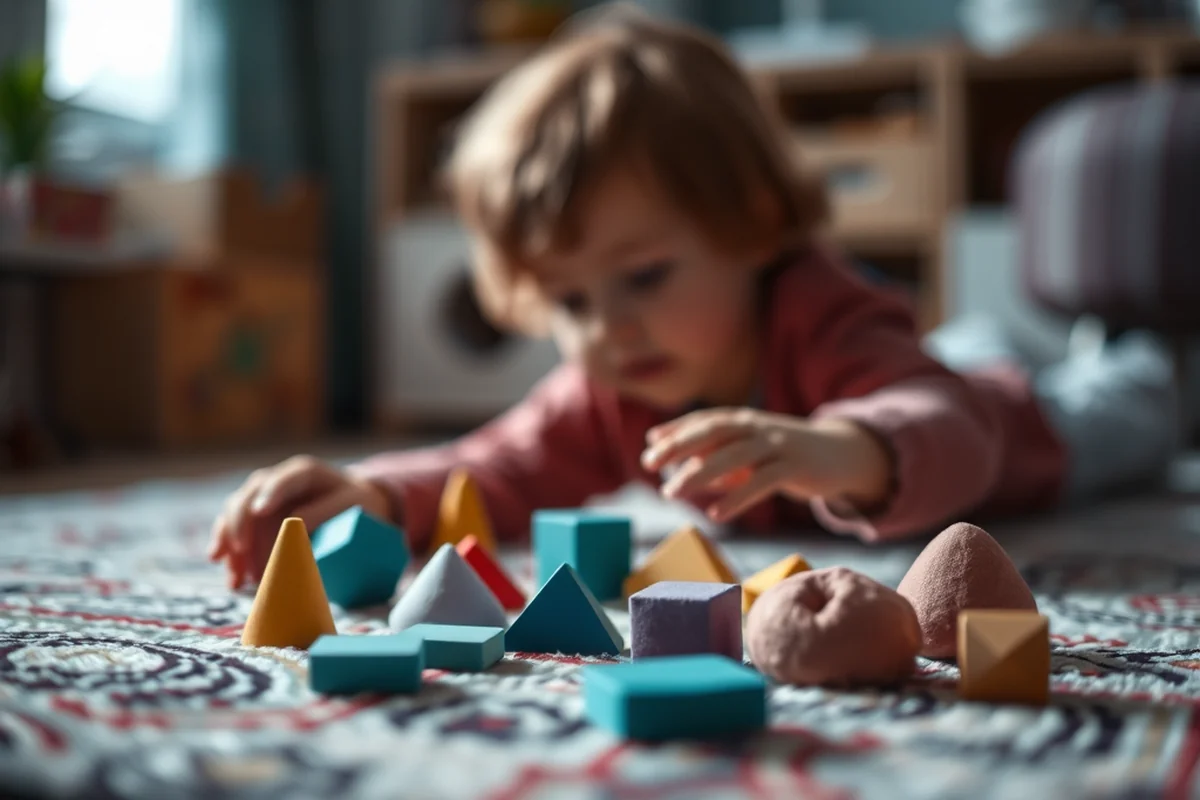
I’ve watched my child role-play as a doctor, teacher, and even a chef — each time, she’s learning about different careers, social interactions, and problem-solving. One day, she told me she was a ‘firefighter’ and asked me to ‘put out the fire’ — that led to a 20-minute conversation about safety and teamwork.[1]
Pretend play doesn’t need props, but when I do use items like a toy stethoscope or a paper crown, it adds an extra layer of engagement. These items are often found at thrift stores or handed down from friends.
This kind of play is especially effective because it’s led by the child’s imagination, which means the learning is both meaningful and fun.
Imagination is the key to unlocking a child’s potential.
Related: Best Play-based Learning Budget
Related: Play based learning budget tips
Getting Outside for Learning
I took my toddler on a walk in our neighborhood park, and she spent the entire time collecting leaves, rocks, and sticks. We talked about their shapes, colors, and how they felt in her hands. It was a simple activity that sparked hours of curiosity and learning.
I’ve used our backyard to create a mini nature scavenger hunt, asking my child to find things like ‘something round’ or ‘something that’s rough.’ This kind of play not only builds observation skills but also encourages a love for the natural world.
Getting outside is not only good for learning — it’s essential for a child’s physical and emotional well-being. Even a short walk or a game of catch can provide valuable lessons in teamwork and coordination.
Even 15 minutes of outdoor play a day can make a big difference in your child’s development and your own peace of mind.
“I remember the day my toddler sat cross-legged on the kitchen floor, using a wooden spoon to 'cook' a meal for her baby doll, while…”— Playschooled editors
Related: Simple Play Based Learning Routines Schedules
Related: Budget play based learning budget ideas
Using Technology Wisely
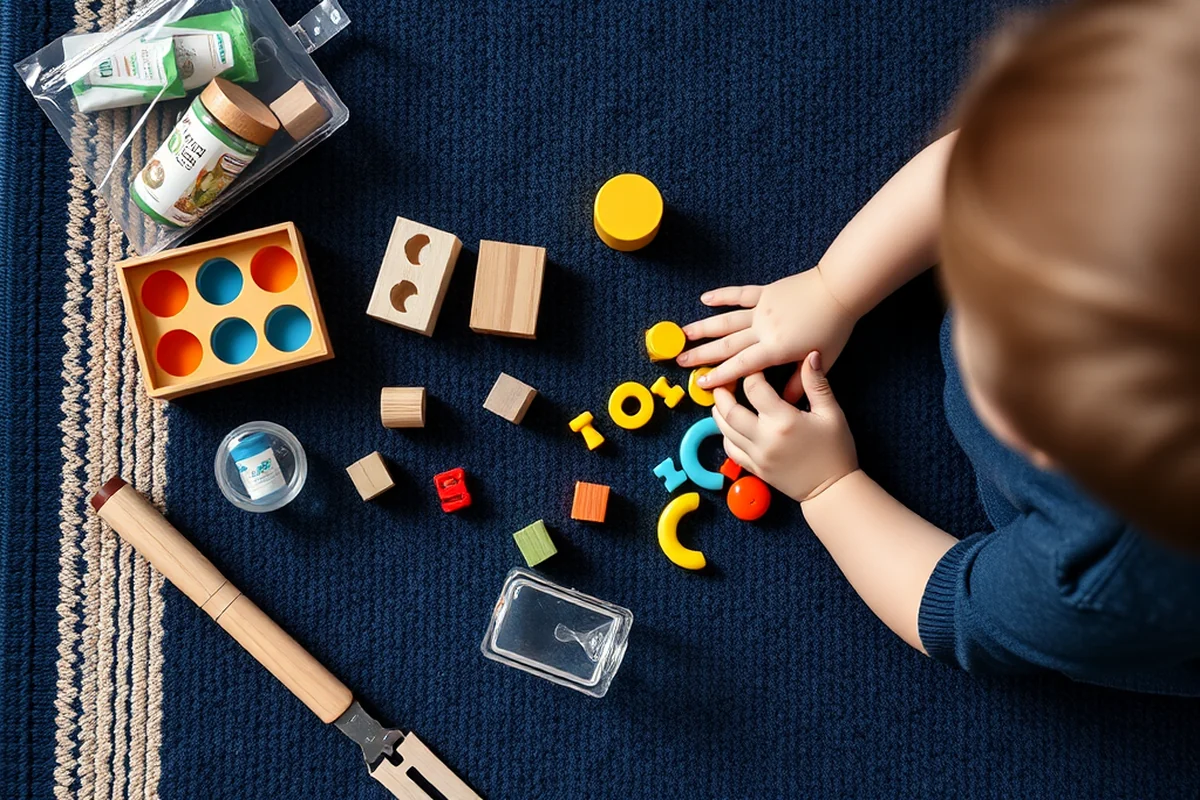
I’ve used my phone’s camera to help my child learn about shapes and colors by taking photos of things she found around the house. We’d name the shapes and play guessing games, which made learning feel like a game.
I’ve also used free educational apps that focus on counting, letters, and patterns. These apps are used only in moderation, and I always make sure to limit screen time to 30 minutes a day, following the American Academy of Pediatrics guidelines.[2]
When used thoughtfully, technology can be a helpful tool, but it should never replace the hands-on, imaginative play that’s so important in early childhood development.
Related: Play Based Learning Routines Schedules Step By Step
Involving the Whole Family
I’ve set up a family learning station where each of us takes turns teaching a skill we’re good at, whether it’s tying shoelaces, telling stories, or drawing. My child has learned new things from every family member, and the bonding experience has been priceless.
We play games together that involve counting, sorting, and problem-solving. One of our favorites is a ‘build-a-house’ challenge, where we use cardboard boxes and sticks to create structures. It’s messy, but it’s also a great way to spend time together and learn.
When the whole family is involved in learning, it reinforces the idea that learning is a lifelong journey and that everyone can contribute to the process.
🧸 Gentle Play-Based Learning
Focus on low-pressure, sensory-based activities that allow your child to explore at their own pace.
⏳ Fast-Track Play-Based Learning
Quick, high-impact activities that can be done in under 10 minutes and still provide valuable learning experiences.
🧳 Travel/away-from-home Play-Based Learning
Activities that can be done on the go, like using hotel towels to make a ‘tent’ or playing ‘I spy’ with shapes and colors.
👶 Multiples Play-Based Learning
Strategies for managing play-based learning with multiple children, such as creating separate learning zones or using cooperative games.
🔄 Regression Reset Play-Based Learning
Activities that help children who are going through a developmental setback or regression to re-engage with learning through play.
| The mistake | Why it happens | The fix |
|---|---|---|
| Rushing the activity or trying to force learning. | This can make the experience stressful for your child and kill their interest in learning. | Let the activity unfold naturally and give your child the space to explore and lead the way. |
| Using too many materials at once or making it too complicated. | This can overwhelm your child and make it hard for them to focus on the learning objective. | Simplify the activity and use only a few materials at a time. Let your child’s curiosity guide the learning process. |
| Not participating or not showing enthusiasm. | Children often mirror their parents’ energy and enthusiasm, so if you’re not engaged, they may not be either. | Get involved, play along, and show your child that you’re excited about learning through play. |
| Trying to fit too many learning goals into one activity. | This can lead to confusion and prevent your child from fully engaging with the activity. | Focus on one or two key learning objectives per activity and let the rest come naturally through exploration. |
Budget Play-based Learning Ideas
Making Use of Community Resources
I’ve discovered that many local libraries offer free workshops for kids, from storytime to STEM activities. These are often led by trained educators and provide hands-on experiences that rival expensive educational programs. For example, my daughter participated in a coding class for kids at our library, and it only cost us a small fee for materials. These programs not only save money but also expose children to a variety of interests and skills they might not otherwise encounter.
DIY Learning Kits for Under $10
I recently made a DIY geography kit using cardboard, markers, and fabric scraps. I cut out shapes of continents and labeled them with the names of countries. My son loved placing the fabric pieces on a map I created from poster board, and it helped him learn about different regions of the world. Similarly, I turned old jars into science kits by filling them with items like dried beans, pebbles, and small rocks. Each jar had a label indicating what type of material it contained, which sparked conversations about nature and classification.
Creating a Sensory Learning Station with Household Items
Turn your kitchen into a sensory learning station using items you already have at home, like rice, beans, and containers, to teach counting, sorting, and measurement.
I set up a sensory learning station on my kitchen table using a colander, a bowl of rice, and a few small containers. I let my 3-year-old scoop, pour, and count the rice, which helped her develop fine motor skills and number recognition. The best part was how engaged she was — she didn’t realize she was learning as she played. It only took 15 minutes to set up and cost me nothing, which made it easy to do regularly. I found that incorporating different textures, like adding dried beans or pasta, kept her interested for longer periods.
I noticed that when I introduced measuring cups and spoons into the mix, she started asking questions like, “How many cups is this?” and “Can I fill it up again?” This simple activity turned into a rich learning experience that involved estimation, comparison, and even basic math. I used a timer to make it a game — whoever could fill the cups the fastest without spilling won. It was a fun way to add a competitive edge, and my child was motivated to improve each time. I also noticed she was more willing to clean up afterward, probably because she felt a sense of accomplishment.
Over the course of a few weeks, I saw her confidence grow as she began to recognize numbers and use them in her play. I later added a small whiteboard and marker so she could write down her counts, which helped with literacy skills. I was impressed by how little it cost and how much learning happened in such a simple setup. This approach is ideal for parents who want to keep their child learning without breaking the bank — it’s about making the most of what you already have at home.
Common Questions
How can I keep my child engaged in play-based learning without buying anything?
What if my child doesn’t seem interested in the activities I create?
Is there a way to track my child’s progress with play-based learning?
Can I combine play-based learning with screen time?
References
- Director's Column: Play-Based Learning Leads to School Readiness (bingschool.stanford.edu)
- Play based learning Research Papers - Academia.edu (academia.edu)
- Why New ECE Teachers Should Embrace Play-Based Learning (athenacareers.edu)
Cite this guide
Playschooled (2026). Budget Play-based Learning Ideas. https://playschooled.com/budget-play-based-learning-ideas/
Feel free to cite or share this guide.