
What Is a Play Space and How Is It Designed

📖 Table of Contents
- What Is a Play Space and Why It Matters
- Designing for Safety and Accessibility
- Encouraging Creativity Through Play Space Design
- Balancing Structure and Freedom
- Making the Most of Limited Space
- Involving Your Child in the Design Process
- Creating a Play Space That Grows With Your Child
- Make It Your Way
- Frequently Asked Questions
I remember the first time I watched my toddler run headfirst into a pile of pillows, only to look up with wide eyes and a grin that said, 'This is the best day ever.' That moment was a revelation — not just for the joy it brought me. For the realization that the way I had set up our home was shaping how my child interacted with the world. It was then that I began to understand the power of a play space. A play space isn't just a corner of the house with blocks and books. It's an intentional, thoughtfully designed environment that supports learning, creativity, and emotional development.
Designing a play space isn't about filling a room with toys. It's about understanding the developmental stages of your child and creating an environment that meets them where they are. I've spent years experimenting with layouts, textures, and materials — and I can tell you that the right setup can transform how a child plays, learns, and even sleeps. It's about safety, accessibility, and a balance of open and enclosed areas that let children explore while feeling secure.
I want to share exactly what a play space is and how to design one that fits your family's needs. Whether you're starting from scratch or looking to revamp your existing space, this guide will walk you through the essentials. You'll learn how to create a space that's not only functional but also a source of joy and growth for your child. And believe me, the transformation in your child's confidence and creativity will be worth every minute of the effort.
Why You'll Love This Play Space Guide
- You'll gain a clear understanding of what a play space is and how it supports child development.
- You'll discover practical, easy-to-implement design tips that work for any home.
- You'll feel more confident in creating a space that's safe, engaging, and tailored to your child's needs.
- You'll see how a well-designed play space can boost your child's creativity, independence, and emotional well-being.
What Is a Play Space and Why It Matters
As of November 2026, a play space is more than just a place for kids to play — it's a carefully crafted environment that supports development at every stage. My son's first play space was a small corner in our living room, but I quickly realized that a few strategically placed items could make all the difference. Whether it's a rug with a tactile texture or a shelf with accessible books, each element has a purpose. A well-designed play space fosters independence, creativity, and emotional regulation in children.
I found that the most effective play spaces combine both open and enclosed areas. Open spaces allow for movement and imagination, while enclosed spaces provide a sense of security. When I added a low, soft-sided play tent to our setup, my son immediately treated it as his own little world. It was a safe place for him to retreat, explore, and even nap. This balance is essential for children who are learning to navigate their environment.
Creating a play space is also about understanding your child's unique needs and interests. For my daughter, who loves music, a small corner with a xylophone and a set of rhythm sticks became her favorite spot. It wasn't about filling the room with everything — it was about creating a space that felt meaningful and engaging to her. This personalization is what makes a play space truly special.
Don't feel pressured to create a perfect play space right away. Start with a few key elements and expand as your child grows and your space allows.
Part of our Play based learning guide.
Designing for Safety and Accessibility
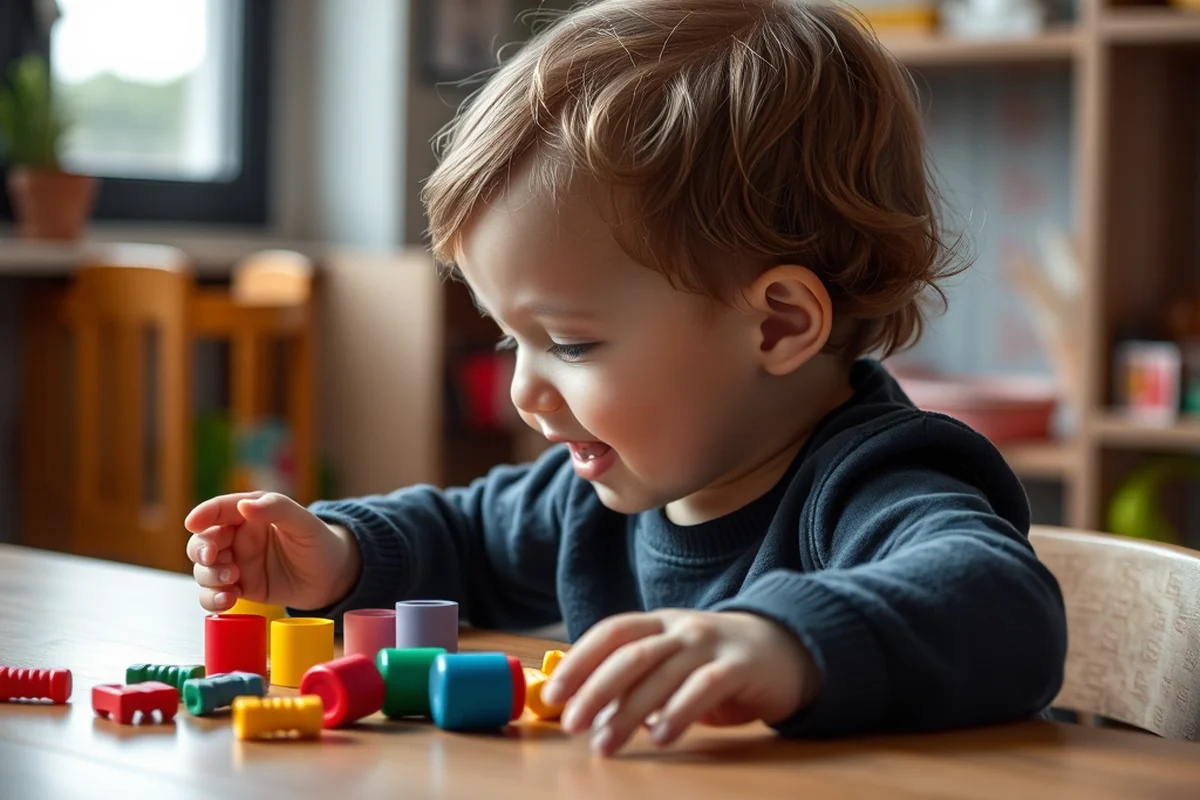
Safety is the foundation of any play space. I made the mistake of using a wooden table with sharp edges early on, and it was a wake-up call. The table was beautiful, but it wasn't suitable for a child who was still learning to crawl. I replaced it with a rounded, low table that had a soft, padded surface — a change that made a huge difference in the way my child interacted with the space.
When designing your play space, look for furniture with rounded corners, secure fastenings, and non-toxic materials. I always check for certifications like the CPSIA (Consumer Product Safety Improvement Act) to ensure that any items in the space are safe for my children. It's also important to keep the area free of hazards like small, choking items and exposed wires.
Accessibility is another key factor. I made sure that all the items in the play space were within my child's reach, so she could explore independently. This meant using low shelves, avoiding high cabinets, and keeping toys in open containers. This approach not only made the space more user-friendly but also boosted my child's confidence as she learned to navigate her environment.
Safety is not an afterthought — it's the first step in creating a meaningful play space.
Related: Best practice game based learning
Encouraging Creativity Through Play Space Design
Creativity is one of the most valuable skills a child can develop, and the right play space can nurture it. I noticed that when I introduced open-ended items like building blocks and art supplies, my child's imagination flourished. She built entire worlds with the blocks and painted scenes that reflected her interests. These materials allowed her to think, create, and problem-solve in ways that I hadn't anticipated.
I also found that flexible layouts were key. When I used modular furniture, like a low shelf that could be rearranged, it allowed for constant reinvention of the space. One day, it was a reading nook; the next day, it was a dramatic play area. This adaptability kept the space exciting and engaging for my child, even as her interests changed.
I made a point to include natural elements like wood, plants, and textures, which inspired my child to explore and connect with the environment. She loved feeling the rough bark of a tree branch and watching the leaves sway in the breeze. These sensory experiences helped her develop a deeper understanding of the world around her.
When choosing materials, consider how they can be used in multiple ways. A cardboard box can be a house, a boat, or a tunnel — the possibilities are endless.
“I remember the first time I watched my toddler run headfirst into a pile of pillows, only to look up with wide eyes and a…”— Playschooled editors
Related: Affordable play based learning benefits
Balancing Structure and Freedom

Finding the right balance between structure and freedom is essential in play space design. I learned this the hard way when I created a space that was too open and chaotic. It was fun for my child, but it also became overwhelming. I realized that without some structure, the space could be too much to manage.
I started by creating designated areas for different activities. For example, I set up a corner for reading, a spot for building, and a small table for art. This helped my child understand that each area had a purpose, making the space more organized and easier to navigate. I also used soft, neutral colors to create a calming environment that encouraged focus and exploration.
It's also important to include a few rules that make the space feel safe and predictable. For example, I established a rule that we would clean up after playing, which helped my child understand the importance of responsibility. This small rule didn't take away from the freedom of the space — it actually made the experience more rewarding for both of us.
Related: Play based preschool curriculum on a budget
Making the Most of Limited Space
I know that not every family has the luxury of a large room dedicated to play, but even the smallest space can be transformed into a meaningful play area. I once converted a corner of our bedroom into a reading and play nook using just a few items. A small rug, a beanbag chair, and a low shelf with books made it feel like a whole new space.
I also made use of vertical space by adding shelves and hanging storage. This helped me keep the floor clear while still having everything within reach. I found that using foldable or modular furniture was especially helpful when space was tight. A table that could be folded away made the room feel more flexible and functional.
It's also important to think about how your child moves and interacts with the space. If the play area is in a small room, I made sure that there was enough room for my child to move around comfortably. I avoided clutter and kept the space organized, which made it more inviting and easier to use.
Related: Is canvas a learning platform
Involving Your Child in the Design Process
Involving your child in the design of their play space is a powerful way to make them feel included and valued. I remember when I asked my daughter what she wanted in her play area. Her answer surprised me — she wanted a small table where she could draw and a spot where she could sit and read. I made sure to include those elements, and it had a lasting impact on how she used the space.
I also let my child help with the setup. She loved choosing the colors for the shelves and picking out the books she wanted to have on display. This not only made the space more personal for her but also taught her about responsibility and ownership. It gave her a sense of pride in her environment, which is something I hadn't anticipated.
Including your child in the design process also helps you understand their interests and preferences better. When I asked my son what he wanted in his play space, he said he wanted a place where he could build with blocks and have his toys in one spot. By honoring his wishes, I created a space that was truly his — a space where he felt comfortable and inspired.
Let your child help design their space — it builds confidence and makes them feel valued.
Related: What is a learning platform
Creating a Play Space That Grows With Your Child
One of the most important aspects of play space design is ensuring that the space can grow with your child. I didn't want to create a space that was only suitable for toddlers — I wanted it to be something that could be used as my child grew into a curious, creative individual. That meant choosing items that could be used in multiple ways and adapting the layout as needed.
I found that using open-ended toys and materials made it easier to transition the space as my child developed. For example, building blocks can be used for simple stacking as a toddler or for more complex structures as an older child. This flexibility allowed the space to remain relevant and engaging for my child at every stage of development.
I also made sure that the space was scalable. When my daughter was younger, she loved playing with soft, plush toys, but as she grew, she became more interested in hands-on activities like cooking and science. I adapted the space by adding a small kitchen set and a few simple science kits that allowed her to explore new interests.
🌱 Gentle Approach
A slow, thoughtful process that focuses on creating a space that feels safe and inviting for your child, with gradual additions over time.
⚡ Fast-Track Setup
A quick and efficient way to create a functional play space in a short amount of time, ideal for busy parents.
🧳 Travel/away-from-home
A portable, lightweight play space that can be easily packed and set up in new environments, like family trips or babysitters' homes.
👶 Multiples Approach
A play space designed with multiple children in mind, offering areas for solo play and group activities to accommodate siblings or friends.
🔄 Regression Reset
A method for reimagining an existing play space when your child is going through a developmental phase or when the space no longer meets their needs.
| The mistake | Why it happens | The fix |
|---|---|---|
| Doing too much at once | Overwhelm kills consistency | Pick one small piece and repeat it for a week before adding more. |
| Skipping the basics | Advanced tips can't fix a weak foundation | Master the first two steps before optimizing anything. |
What Is A Play Space
Common Questions
How do I know what kind of play space my child needs?
Can I create a play space in a small room?
What if my child is too young to help design the space?
How can I ensure the play space is safe for my child?
Cite this guide
Playschooled (2026). What Is a Play Space and How Is It Designed. https://playschooled.com/what-is-a-play-space/
Feel free to cite or share this guide.