
Play Based Learning By Age Stage Ideas

📖 Table of Contents
When my daughter turned two, I watched her try to build a tower with blocks, only to knock it down every time. It didn’t occur to me that this was a lesson in gravity, balance, or even problem-solving. That moment was the first time I realized that play-based learning is not just a buzzword—it’s the way my child truly learns. By embedding learning into play, I saw how her curiosity, persistence, and creativity flourished naturally. This is the heart of play-based learning by age stage ideas: making the most of every moment without a textbook in sight.[1]
Play-based learning by age stage ideas isn’t about structured lessons or flashcards. It’s about observing what your child is naturally interested in, then building on that with purpose. For example, when my toddler loved drawing with crayons, I introduced her to shapes and colors by asking her to draw triangles and circles. She didn’t know the names, but she was learning through repetition, motor skills, and pattern recognition. It’s a subtle, but powerful form of learning that doesn’t require a teacher or a schedule.
I’ve tested different play-based learning by age stage ideas over the years and what I’ve learned is that the best results come when you align activities with developmental milestones. Whether your child is just starting to explore objects, learning to count, or developing empathy, there are specific, stage-appropriate play ideas that work best. I’ll share exactly how I’ve done this with my child and how you can do the same with yours.
Why You'll Love This Approach to Play-Based Learning
- Encourages natural curiosity and discovery in children.
- Strengthens parent-child bonds through shared play.
- Supports cognitive, emotional, and physical development without pressure.
- Can be tailored to your child's interests and developmental stage.
0–12 Months: Sensory Play for Early Exploration
As of November 2026, During the first year of life, babies are in the process of building their sensory and motor skills. My son loved playing with soft, squishy toys, which taught him about texture and pressure. I often used a simple bath time routine, where I would let him play with water and floating toys, helping him understand cause and effect as he dropped objects into the water.
I introduced a few sensory bins with items like rice, dry beans, and soft balls. These became a favorite part of his day, and he would spend hours digging through them, developing hand-eye coordination and fine motor skills. The key was to keep the activities safe, engaging, and adaptable to his current interests.
By the time he turned one, he had already developed a strong grasp of object permanence through hide-and-seek games with his toys. I never had to use any formal tools—just a few household items and a lot of patience. The result was a curious, exploring baby who was clearly learning every day.
Try filling a container with rice, beans, or shredded paper and let your baby explore with their hands. It's a low-cost, safe, and endlessly engaging way to stimulate their senses.
Part of our Play based learning by age stage guide.
12–24 Months: Play-Based Learning Through Pretend Play
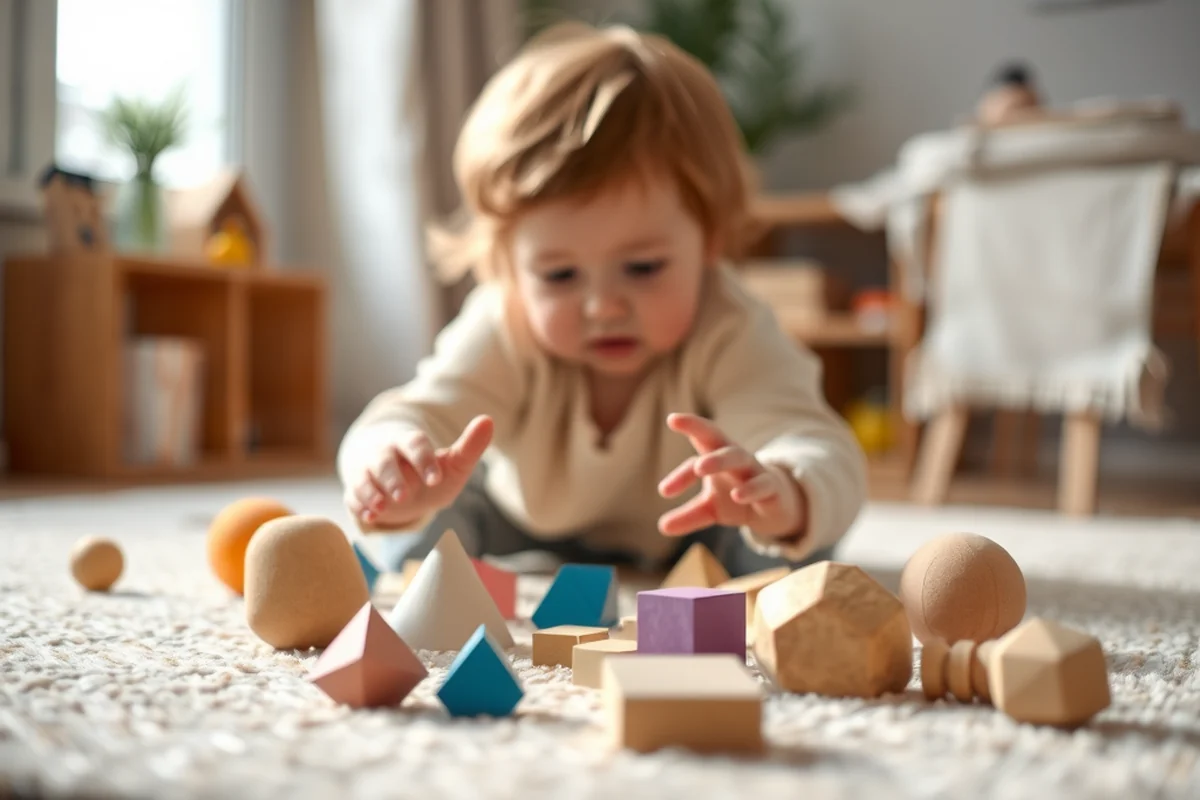
At 14 months, my daughter started pretending to cook with a small kitchen set. She would 'stir' her soup with a wooden spoon and 'serve' it to me. Even though she didn’t understand real cooking, she was practicing language, role-play, and social interaction through this imaginative play.[2]
I made sure to join her in these pretend scenarios, which not only made her feel supported but also helped her develop a richer vocabulary. I would repeat the words she used and add new ones naturally, like ‘stir,’ ‘pour,’ and ‘clean up.’ This kind of interaction is one of the most effective ways to support language development.
One of the biggest surprises was watching her solve a problem by herself. She once tried to 'fix' a broken toy by pretending to glue it back together. This showed early signs of logical thinking and creativity—something I hadn’t expected at her age.
Imaginative play isn’t just fun—it’s the first step to complex thinking.
Related: Play based learning by age stage mistakes to avoid
2–3 Years: Structured Play for Early Skills
At two years old, my daughter began playing with puzzles and simple matching games. I discovered that using picture cards with animals and objects helped her learn to identify and name things around her. She would match the picture cards to their real counterparts in the room, which made learning more concrete and engaging.
I also introduced counting with blocks and toys. We would count out five blocks and then take one away to see what happened. This helped her understand the concept of one-to-one correspondence, an essential math skill. These activities were always done in short bursts—10 to 15 minutes at a time—to keep her attention.
One of the most rewarding results was when she started to ask me questions like, ‘What comes next?’ or ‘Can we count this?’ These were clear signs of early math and language development. The key was to keep the play meaningful and not forced.
Children this age have short attention spans, so aim for 10–15 minutes of focused play. Use toys that encourage counting, matching, and following simple directions.[3]
“When my daughter turned two, I watched her try to build a tower with blocks, only to knock it down every time.”— Playschooled editors
Related: Learn play piano for beginners
3–5 Years: Play That Builds Social and Cognitive Skills
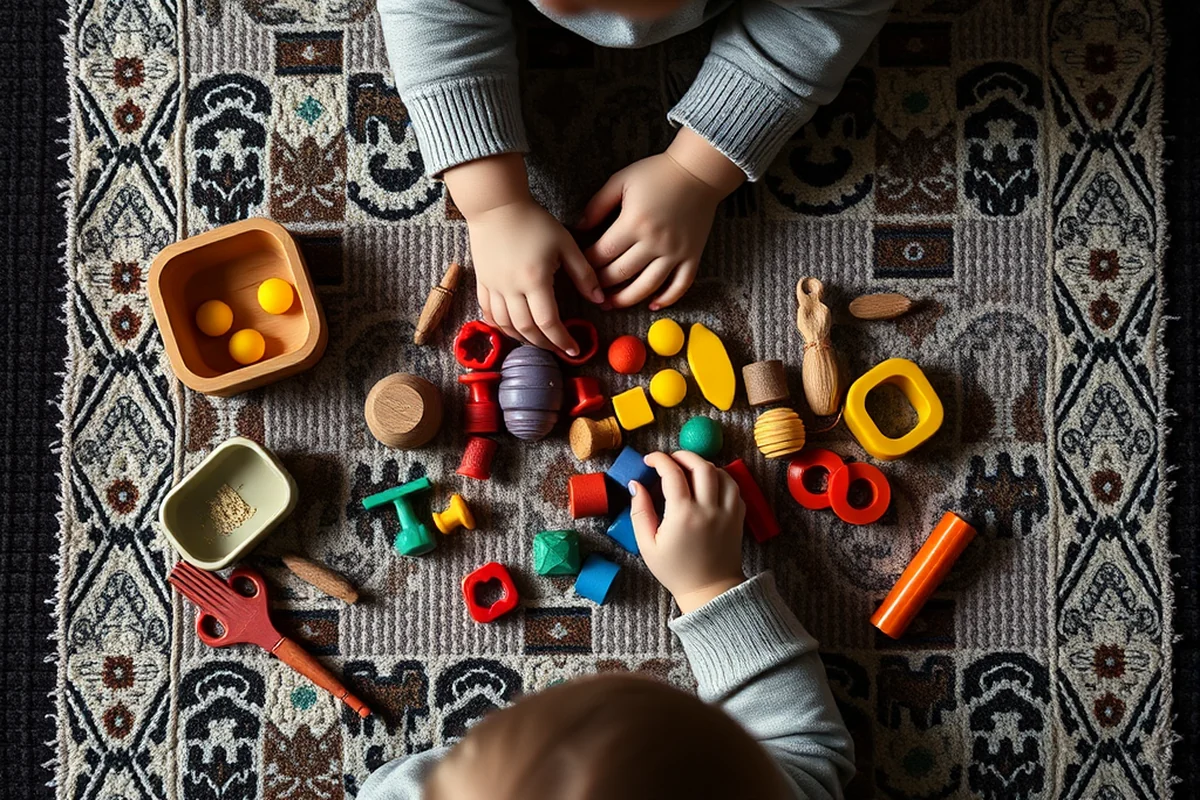
When my daughter turned four, I noticed she was more interested in playing with other kids. We started having ‘playdates’ at home where she would invite friends over to share toys and play. I saw her learn to take turns, share, and solve problems together with her peers.
We also introduced more complex games like memory cards and simple board games that required planning and strategy. These helped her develop critical thinking skills and patience. I made sure to play with her to model how to handle winning and losing gracefully.
One of the most surprising outcomes was her increased confidence. She began speaking more clearly, using full sentences, and even starting to read simple books on her own. These were all side effects of the play-based learning by age stage ideas we had been using.
Related: Age play meaning
5+ Years: Play That Encourages Independence and Creativity
As my daughter reached five, I noticed that she was more interested in creating her own games and stories. She would draw elaborate scenes, write simple stories, and even set up pretend scenarios where she acted out different roles.
I gave her access to art supplies, building blocks, and books that encouraged open-ended play. She would spend hours designing her own world, which helped her develop creativity and critical thinking. I made sure to step back and let her lead the play, only offering support when she needed it.
The biggest shift I saw was her growing independence. She began making decisions on her own, solving problems without help, and even teaching her younger sibling simple concepts. This was the most rewarding part of the play-based learning by age stage ideas I had ever used.
🧸 Gentle Play-Based Learning
For parents who prefer a slow, flexible approach, focusing on observation and child-led play.
🚀 Fast-Track Play-Based Learning
For busy families who want to embed learning quickly and efficiently into daily routines.
🧳 Play-Based Learning on the Go
Ideal for families who are always traveling and need portable, low-mess play ideas.
👯 Play-Based Learning for Multiples
Tailored for parents with more than one child, focusing on shared learning and play.
🔄 Play-Based Learning During Regression
Helps support children during developmental plateaus or setbacks through structured, playful routines.
| The mistake | Why it happens | The fix |
|---|---|---|
| Trying to force learning into every play moment. | Forcing learning can make play feel like a chore, which can reduce your child's interest and motivation. | Let your child lead the play and learn naturally through curiosity and exploration. |
| Using too many new toys or activities at once. | This can overwhelm your child and make it hard for them to focus or engage meaningfully. | Introduce one or two new activities at a time and let your child explore them slowly. |
| Not adapting play to your child’s current developmental stage. | Activities that are too advanced can frustrate your child and discourage them from trying again. | Choose activities that match your child’s current abilities and interests to keep them engaged. |
| Overlooking the importance of unstructured play. | Too much structured learning can stifle creativity and natural exploration. | Allow time for unstructured, free play where your child can explore and learn on their own terms. |
Related: Learn play ukulele
Play Based Learning By Age Stage Ideas
Related: What is to role play
6–8 Years: Play That Fosters Responsibility and Problem Solving
At this age, kids are ready to take on more complex play that builds responsibility and problem-solving skills.
Between 6 and 8 years old, children begin to understand the concept of responsibility and can be engaged with play that requires them to manage tasks and think through solutions. I’ve found that giving them small household chores, like watering plants or organizing their backpacks, not only builds independence but also teaches them the value of completing tasks. These activities should be framed as games or challenges, which keeps them motivated and engaged without feeling like work.
I’ve also used board games that involve strategy, like Catan or Ticket to Ride, which help develop critical thinking and decision-making skills. These games require planning ahead, managing resources, and adapting to changing circumstances—skills that are crucial for academic and life success. What I love about these games is that they can be played repeatedly, allowing kids to improve with each session. Plus, they encourage teamwork and communication when played with siblings or friends.
Another great way to foster responsibility is through role-playing scenarios that require them to make decisions. For example, I’ve set up a pretend grocery store where my child is in charge of managing inventory, pricing items, and helping customers. This kind of imaginative play not only enhances their problem-solving abilities but also builds confidence as they take on leadership roles. It's amazing to see how these activities translate into real-life skills as they grow older.
Common Questions
Can I use play-based learning even if I’m not a teacher or have no formal education?
How do I know what activities are appropriate for my child’s age?
Do I need to buy special toys or equipment for play-based learning?
What if my child doesn’t seem interested in learning through play?
References
- Milestones by 2 Years | Learn the Signs. Act Early. - CDC (cdc.gov)
- Relating Children's Ages to Toy Characteristics and Play Behavior (cpsc.gov)
- The Impact of Social Play on Young Children (digitalcommons.murraystate.edu)
Cite this guide
Playschooled (2026). Play Based Learning By Age Stage Ideas. https://playschooled.com/play-based-learning-by-age-stage-ideas/
Feel free to cite or share this guide.