
Affordable Play-Based Learning Budget Ideas and How to Start

📖 Table of Contents
I still remember the look on my son's face when he built his first tower out of cardboard boxes and old books — eyes wide, hands trembling with the excitement of discovery. It wasn't a fancy toy, but that moment of joy and learning was priceless. As a parent, I quickly realized that play-based learning didn't need to come with a price tag, and that led me to explore what I now call 'affordable play based learning budget ideas'.[1]
It's easy to feel like you need a lot of money to create a stimulating environment for your kids. But over the years, I've learned that some of the most effective learning tools can be found right in your own home. Things like building blocks, books, and even simple household items can turn everyday moments into powerful learning experiences. The key is to be intentional and creative with what you have.[2]
What I’ve discovered is that affordable play-based learning isn't just about saving money — it's about fostering curiosity, creativity, and critical thinking in your children. With the right mindset and a little planning, you can create a rich, engaging learning environment for your kids without breaking the bank. That's exactly what this article is about: sharing real, tested, and actionable ideas for making play-based learning work on a budget.[3]
Why You'll Love This Budget Approach to Play-Based Learning
- You'll discover that learning can happen anywhere — not just in expensive educational toys or formal classrooms.
- You’ll learn how to repurpose items you already own into powerful learning tools.
- You’ll find that creative play fosters deeper learning and long-term skills.
- You’ll see how these ideas can adapt to different learning styles and stages of development.
Start with What You Already Have
As of November 2026, I still use our old cardboard boxes for building, sorting, and stacking. One day, I found a broken toy that was missing parts — instead of throwing it away, I turned it into a scavenger hunt. It taught my child about problem-solving and resourcefulness. The best part is that these activities cost nothing and use items you probably already have in your home.[4]
It's surprising how much your child can learn from simple things. For example, I used a measuring cup from the kitchen for sorting and counting activities, and a piece of string for weaving and pattern-making. These items, which might otherwise be ignored, became tools for learning.
I've also used household items like buttons, beads, and even old magazines for activities that teach sorting, matching, and creativity. My child didn’t even realize he was learning — he was just having fun, which is exactly what play-based learning is all about.
Take a broken toy or a household item and give it a new purpose. It's a great way to teach resourcefulness and creativity.
DIY Tools Are Often Cheaper and More Engaging
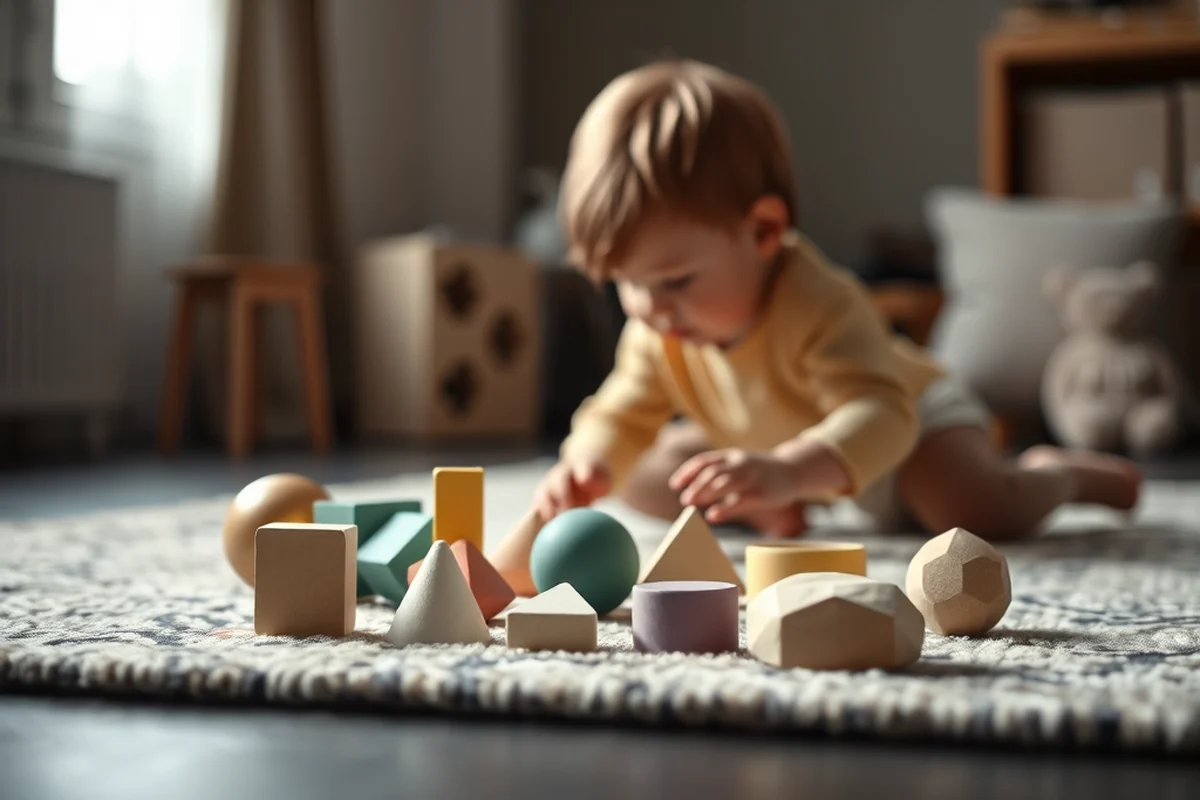
I once made a simple sorting game with colored paper and glue — it cost me less than $5 and took about an hour to make. My child loved it, and he still uses it today. It's not about making perfect tools — it's about making tools that are personal and tailored to your child's interests.
I've also made flashcards with my child using old index cards and markers. He helped me choose the pictures and write the words, which made the activity more engaging for him. It was a great way to teach literacy and memory skills, and it was a bonding experience for us.
DIY tools can be customized to your child's learning style, and they often last longer than store-bought items. Plus, there's something special about knowing that your child helped create the tools he's using to learn.
Making tools with your child turns learning into a shared adventure.
Related: Play based learning budget that actually work
Play-Based Learning Works Anywhere, Not Just in a Classroom
I remember the first time I realized that learning could happen outside — my child was counting birds in the park, and it became a spontaneous lesson in math and biology. That was a huge insight for me, and it opened up a whole new world of learning opportunities.
I now take advantage of every opportunity to learn while we're out and about. We use the grocery store for counting, the park for nature exploration, and the library for reading and storytelling. These moments are not only educational but also deeply engaging for my child.
I've found that learning is more meaningful when it's connected to real-life experiences. Whether we're cooking together or exploring a new place, these are all opportunities for my child to learn through play and discovery.
Take learning opportunities wherever you go — even the grocery store can be a place for counting and sorting.
“I still remember the look on my son's face when he built his first tower out of cardboard boxes and old books — eyes wide…”— Playschooled editors
Related: Play based learning budget ideas checklist
Set a Budget, Not a Limit
I set a small monthly budget for educational toys and games, and I've been amazed at how much that little amount can do. I've bought a few high-quality items over time that have lasted for years and provided countless hours of learning and fun.
I also use online marketplaces and secondhand stores to find affordable, used items that are still in good condition. This has helped me stretch my budget further and avoid buying unnecessary or low-quality items.
I've learned that it's better to invest in a few high-quality items that last than to buy a lot of cheap ones that break easily. This approach has helped me stay within my budget while still giving my child meaningful learning experiences.
Related: Play based learning budget for beginners
Play-Based Learning Builds More Than Skills — It Builds Confidence
I've seen my child grow more confident as he takes on challenges and solves problems through play. Whether he's building a tower or learning to read, he's developing the skills to believe in himself and his abilities.
Play-based learning allows children to explore, make mistakes, and learn from them without fear of judgment. This helps them build resilience and a growth mindset — qualities that will serve them throughout their lives.
I've noticed that when my child is confident in his abilities, he's more willing to try new things and take on challenges. This is a powerful outcome of play-based learning, and it's one of the reasons why I believe it's so valuable.
🌱 Gentle Start
Begin with simple, low-effort activities that build confidence without overwhelming your child.
🚀 Fast-Track
Jump into a few high-impact activities with quick setup and maximum learning value.
✈️ Travel/away-from-home
Use lightweight, portable items that make learning engaging even while on the go.
👶 Multiples
Adapt activities to work for multiple children and different learning levels.
🔄 Regression Reset
Use play to help your child relearn and regain confidence after setbacks.
| The mistake | Why it happens | The fix |
|---|---|---|
| Trying to do too much at once | This can overwhelm your child and make learning feel like a chore rather than a fun activity. | Start with one or two activities and build from there — let your child's interest and engagement guide the way. |
| Focusing too much on outcomes rather than the process | This can take the joy out of learning and make it feel like a task rather than an exploration. | Celebrate the process of learning, not just the end result — even small steps are worth celebrating. |
| Not adapting to your child's learning style or interests | This can lead to disengagement and frustration, making it hard for your child to benefit from the activities. | Observe your child's interests and learning style — tailor activities to fit what they enjoy and how they learn best. |
| Ignoring the importance of play | Without play, learning can feel forced and disconnected from your child's natural curiosity. | Remember that play is the foundation of learning — let your child lead the way and make learning fun. |
Related: Quick play based learning budget ideas
Affordable Play Based Learning Budget Ideas
Related: Best play based learning budget ideas
Repurpose Everyday Items for Creative Play
Everyday household items can be transformed into valuable learning tools that promote creativity and exploration.
I’ve discovered that the kitchen, garage, and even the bathroom are goldmines for transforming ordinary items into engaging learning tools. For example, my daughter loves using measuring cups and spoons from our kitchen to explore volume and weight, while my son enjoys using cardboard boxes to build forts and structures. These activities not only foster creativity but also introduce important mathematical concepts in a fun and natural way.
I’ve repurposed old jars, bottles, and containers into sorting and counting games, which have helped my children develop early numeracy skills. We use buttons, beads, and small toys to practice sorting by color, size, and shape. This type of play is not only educational but also highly engaging for young children. I’ve noticed that my kids are more motivated to participate in learning activities when they’re using items that are familiar to them.
One of my favorite repurposed items is an old sheet turned into a giant painting canvas. My children love splashing paint on it and then using it as a makeshift mural in our living room. This simple activity encourages artistic expression, fine motor development, and even basic concepts of color mixing. I’ve found that by reimagining everyday objects, we’re not only saving money but also making learning more personal and meaningful for our children.
Make the Most of Free Community Resources
Local libraries, museums, and parks often offer free or low-cost programs that support play-based learning.
I've found that many libraries have storytime sessions, STEM kits for checkout, and even parenting workshops that focus on learning through play. These resources are often overlooked but can be incredibly valuable. For example, our local library offers a monthly 'Family Science Night' where kids can explore simple experiments with minimal supervision. It’s a great way to engage children in learning without spending a dime.
Parks and recreation departments frequently host events like nature walks, art classes, and music sessions that are both educational and fun. I once took my daughter to a free outdoor scavenger hunt at the community center, which combined learning about plants with physical activity and creativity. These events are usually free or low-cost and often require only advance registration.
Another gem is the use of free museum passes or discounted tickets for families. Some cities offer passes that grant access to multiple museums for a small fee. I’ve used these to take my kids to science centers and art galleries, where they’ve explored exhibits that reinforce concepts we're learning at home. These experiences are both enriching and budget-friendly, proving that learning through play doesn’t have to be expensive.
Common Questions
Can I really learn a lot without expensive toys?
What if I have a limited budget?
How do I know what activities are best for my child?
Can I make my own learning tools?
References
- Children's Learning and Development Benefits from High-Quality ... (acf.gov)
- The emergence of play-based learning legislation and its ... (brookings.edu)
- Early Childhood | Carlsbad, CA (carlsbadca.gov)
- Powerful Role of Play in Early Education Resources (cde.ca.gov)
Cite this guide
Playschooled (2026). Affordable Play-Based Learning Budget Ideas and How to Start. https://playschooled.com/affordable-play-based-learning-budget-ideas/
Feel free to cite or share this guide.