
DIY Play-based Learning Routines

📖 Table of Contents
- The Magic of Open-Ended Play
- Why Play-Based Learning Works for Toddlers and Preschoolers
- The Power of Routines in Play-Based Learning
- How to Choose the Right Materials for Play-Based Learning
- Play-Based Learning and Emotional Development
- The Role of Parents in Play-Based Learning
- How to Handle the 'But I Can't Do This!' Moments
- Make It Your Way
- Frequently Asked Questions
I remember the first time my daughter built a tower of blocks that reached the ceiling — not because I taught her how, but because she was simply playing. That moment crystallized for me the power of DIY play-based learning routines. These routines are not about structured lessons or flash cards; they’re about creating environments where curiosity, creativity and learning happen organically. Over the past few years, I've watched my children transform from shy, hesitant toddlers into confident, inquisitive learners, all through the simple act of playing — and it didn’t cost a fortune.
DIY play-based learning routines are not a luxury. They’re a way of life — one that fits seamlessly into the chaos of everyday parenting. I’ve tested dozens of methods, from open-ended play with natural materials to sensory bins that teach physics by accident. The best part? They don’t require a lot of time, money or prior knowledge. What they do require is a shift in mindset: seeing play as the foundation of learning, not a detour from it.
In the last year alone, I’ve implemented play-based learning routines that helped my kids learn to count, read simple words, and even understand cause and effect. These routines aren’t about following a script — they’re about observing, adapting and responding. It’s a process that feels messy, but it’s also deeply rewarding. And the more I’ve done it, the more I’ve realized that these routines are a gift that keeps on giving — for both parents and children.
Why You'll Love This Approach to Learning
- Encourages lifelong curiosity and a love for learning
- Requires minimal time and resources
- Adapts to your child’s unique interests and developmental stage
- Strengthens the parent-child bond through shared play
The Magic of Open-Ended Play
As of November 2026, Open-ended play is the cornerstone of DIY play-based learning routines. When I set out a basket of loose parts — wooden blocks, fabric scraps, buttons, and cardboard — my daughter’s imagination took over. One day, she was building a castle; the next, she was arranging the buttons into patterns. There was no instruction, no direction, and yet, she was learning spatial reasoning, sorting, and even basic counting. It was like watching a puzzle piece fall into place.
The beauty of open-ended play is that it adapts to your child’s interests and abilities. If your child is into pretend play, they might be running a grocery store with blocks and toys. If they're drawn to sensory experiences, they might be exploring textures with a bin of rice and plastic animals. It’s not about what they do — it’s about the process and the learning that happens naturally as they explore.
I’ve noticed that the more freedom my child has in play, the more she takes initiative. She asks questions, solves problems, and even teaches me things. It’s a reminder that learning is not a one-way street — it’s a dialogue, and the most powerful lessons come from curiosity, not correction.
Keep a basket or bin of loose parts in a visible, accessible spot. Rotate the contents every few days to keep the play fresh and engaging. My favorite items are blocks, fabric scraps, and natural materials like sticks and leaves.
Part of our Play based learning routines schedules guide.
Why Play-Based Learning Works for Toddlers and Preschoolers

Between the ages of 18 months and 3 years, children are in a stage of development where they learn best through hands-on exploration. During this time, their brains are like sponges, absorbing information from every interaction. Play-based learning routines are designed to mirror this natural way of learning — they’re active, sensory, and filled with discovery.[1]
I’ve seen this firsthand with my child. When I set up a simple activity — like sorting different colored beads onto strings — she didn’t just follow instructions; she experimented, made mistakes, and tried again. It wasn’t about getting the right answer — it was about the joy of discovery. That’s the essence of play-based learning: it’s not about perfection, it’s about process.
Research shows that children who engage in play-based learning are more likely to develop strong problem-solving skills, creativity, and emotional intelligence. It’s not just about academic skills — it’s about building a foundation for life.
Play is the work of childhood.
Related: Play based learning routines schedules for beginners
The Power of Routines in Play-Based Learning
Routines don’t have to be rigid. In fact, they work best when they’re flexible and responsive. For example, I’ve created a daily ‘play time’ window where my child can explore freely without interruptions. It’s not about forcing learning — it’s about creating space for it to happen naturally. This time has become a cornerstone of our day, and it’s made a noticeable difference in her development.
I’ve found that consistency helps children feel safe and supported. When they know that there will be time for play, they’re more likely to engage in it with confidence. It’s like a little anchor in the chaos of everyday life — a reminder that learning is something they can do, and that they’re capable of it.
The key is to let the routine be a flexible guide, not a strict rule. If my child is in the middle of a creative project, I’ll allow it to continue. If she’s tired, I’ll adjust the time. The goal is to support her, not to control her.
Try a simple daily or weekly play schedule. For example, set aside 20 minutes each day for free play. Use a visual timer or a song to signal the start and end of play time. This helps your child understand expectations while still allowing room for exploration.[2]
“I remember the first time my daughter built a tower of blocks that reached the ceiling — not because I taught her how, but because…”— Playschooled editors
Related: Play based learning routines schedules ideas
How to Choose the Right Materials for Play-Based Learning
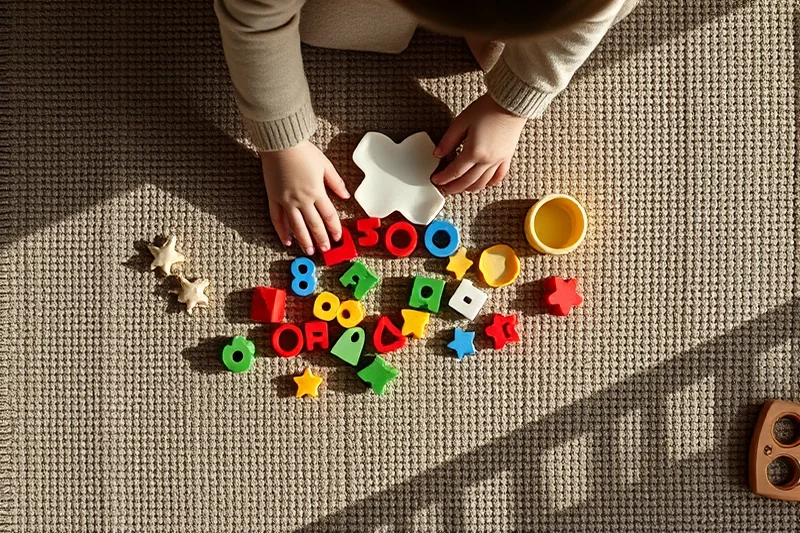
Material choice is crucial in DIY play-based learning routines. I’ve found that natural and open-ended materials — like wood, fabric, and cardboard — are ideal for encouraging creativity and exploration. These materials are not only safe, but they also allow for endless possibilities. My child has built entire cities with blocks, created stories with fabric scraps, and even made a miniature garden with rocks and leaves.
I’m not a fan of overly structured or branded toys, but I do believe in quality. For example, I’ve used a set of wooden counting blocks that have lasted for years and have been used in multiple learning contexts. These materials are simple, durable, and allow for both imaginative and educational play.
When choosing materials, I always consider safety, durability and versatility. Natural materials are often the best bet — they’re less likely to have small parts, they’re eco-friendly, and they can be used in a variety of ways. It’s a small investment that pays off in big ways.
Related: Play based learning routines step by step
Play-Based Learning and Emotional Development
Emotional development is a key part of early childhood, and play-based learning can support it in powerful ways. When my child is playing with other children, she learns how to take turns, share, and express her feelings. These are all critical social-emotional skills that are best developed through experience, not instruction.
I’ve noticed that when she’s engaged in play, she’s more patient, more empathetic, and more willing to try new things. It’s like a softening of the edges — she’s learning how to interact with others and how to deal with challenges. These skills are just as important as reading or counting.
It’s not about teaching her how to be kind — it’s about providing the space for her to practice it. Play is where the lessons of empathy, cooperation, and emotional regulation are learned naturally. That’s the power of play-based learning: it’s not just about learning — it’s about becoming.
Related: Diy play based learning routines schedules
The Role of Parents in Play-Based Learning
I used to think that play-based learning meant stepping back and letting the child take the lead. But over time, I realized that my role as a parent is just as important — it’s just different. I don’t need to be the teacher, but I do need to be a facilitator, a supporter, and a guide.
One of the most effective ways I’ve supported my child’s learning is by asking open-ended questions. Instead of telling her how to build a tower, I ask, 'What do you think will happen if you put this block here?' These questions encourage her to think critically and problem solve on her own.
I’ve also learned to be present — not in a controlling way, but in a way that shows her I’m interested in what she’s doing. Just sitting nearby, listening, and offering gentle support has made a big difference. It’s a subtle shift, but it’s powerful.
The best learning happens when parents are curious, not instructive.
Related: Play based learning routines ideas
How to Handle the 'But I Can't Do This!' Moments
There will be times when your child gets frustrated, or when you feel like you’re not helping enough. I’ve been there — watching my child struggle with a puzzle, or seeing her give up on a project. It’s tempting to step in and fix the problem, but I’ve learned that sometimes, the best thing to do is to step back and let her figure it out.
I’ve found that modeling patience is one of the most important things I can do. When she’s frustrated, I don’t say, 'You can do it.' Instead, I say, 'This is tricky. Let’s try again.' I’ve even sat with her and worked through problems together, not as a teacher, but as a teammate.
These moments are not failures — they’re learning opportunities. And for me, as a parent, they’re also a reminder that learning is a process, not a destination. It’s not about being perfect — it’s about being present, and it’s about helping your child find her own way.
🌿 Gentle Play-Based Routines
Perfect for sensitive or easily overwhelmed children. Focus on low-stimulation activities like nature walks, quiet storytelling, or gentle sensory play.
⚡ Fast-Track Play-Based Learning
Ideal for busy parents. Use short, high-impact activities like 10-minute sorting games, quick pretend play scenarios, or simple science experiments with household items.
✈️ Travel/On-the-Go Play-Based Learning
Keep a portable play kit with items like magnetic tiles, mini books, or stacking cups. These can be used in cars, airports, or anywhere you're waiting.
👯♀️ Play-Based Learning for Multiples
Use cooperative play activities that encourage teamwork. For example, build a shared structure, or create a collaborative story with multiple children.
🔄 Regression Reset Play Routines
If your child is experiencing a developmental regression, use play to re-engage them. Focus on simple, repetitive activities that build confidence and familiarity.
| The mistake | Why it happens | The fix |
|---|---|---|
| Trying to force learning into play | This can make play feel like work, which can reduce engagement and creativity. | Let learning emerge naturally. Observe your child and respond to their interests — don’t push them into a specific activity. |
| Using too many structured or commercial toys | These can limit creativity and exploration. They often have a single purpose, which doesn’t allow for open-ended play. | Opt for natural, open-ended materials that can be used in multiple ways, like wood, fabric, or cardboard. |
| Not adapting the routine to your child’s needs | Each child is different. A routine that works for one child may not work for another. | Be flexible and responsive. Adjust the routine based on your child’s interests, developmental stage, and personality. |
| Overlooking the emotional aspect of play-based learning | Play is not just about learning — it’s also about emotional growth. Focusing only on cognitive skills can miss out on key social-emotional development. | Make sure to create a safe, supportive environment where your child can express emotions, take risks, and learn from mistakes. |
DIY Play-based Learning Routines
Common Questions
How do I know if my child is learning through play?
Can I do play-based learning with just a few materials?
What if my child is not interested in the activities I choose?
How long should a play-based learning session last?
References
Cite this guide
Playschooled (2026). Diy Play-based Learning Routines. https://playschooled.com/diy-play-based-learning-routines/
Feel free to cite or share this guide.