
Is Play Based Learning Effective and Why Is It Essential

📖 Table of Contents
- What Is Play Based Learning and Why Does It Work?
- How Play Based Learning Builds Cognitive Skills
- The Social and Emotional Benefits of Play Based Learning
- How Play Based Learning Encourages Creativity and Innovation
- The Role of the Adult in Play Based Learning
- How Play Based Learning Supports Language Development
- The Long-Term Impact of Play Based Learning
- Make It Your Way
- Frequently Asked Questions
There’s something magical about the way my son’s face lights up when he’s building a tower with wooden blocks. It’s not just a game — it’s learning. I remember the first time he figured out how to balance the blocks without them falling over. I saw this spark in his eyes that said, ‘I did it!’ That moment made me realize the power of play based learning. It’s not just effective, it’s essential. It’s how children learn best, and how they retain knowledge the longest.
As a parent who’s juggling a full-time job and a busy home life, I’ve found that play based learning isn’t just about entertainment — it’s about education. I’ve spent countless hours watching my kids engage with puzzles, explore nature, and play pretend, and I’ve seen how these moments shape their thinking, creativity, and problem-solving skills. It’s not always easy to find the time, but I’ve learned that even small, focused play sessions can have a huge impact on their development.
I’ve also noticed how play based learning bridges the gap between what kids are taught in school and how they naturally learn. It’s not about drilling facts or memorizing formulas — it’s about engaging their curiosity and letting them explore. I’ve seen how effective this approach is, and why it’s essential for their growth. It’s not just a trend — it’s a proven, child-centered way to learn that sticks with them long after the game is over.
Why You'll Love This Play Based Learning Approach
- Encourages deep, lasting understanding of concepts through hands-on exploration.
- Builds critical thinking and creativity without the pressure of formal instruction.
- Strengthens emotional development through imaginative and collaborative play.
- Creates a natural, stress-free learning environment that children thrive in.
What Is Play Based Learning and Why Does It Work?
As of November 2026, when I first heard the term ‘play based learning,’ I assumed it was just another buzzword — a way for schools to sound modern without actually changing anything. But I was wrong. Play based learning is about allowing kids to lead the way, to ask questions, and to explore the answers through hands-on experiences. It’s not about forcing learning into a rigid structure, but about letting it unfold naturally.
I’ve seen my son use a magnifying glass to study the texture of leaves, and I’ve watched him build entire cities with cardboard boxes. These aren’t just random activities — they’re learning moments. He’s developing fine motor skills, learning about shapes and spatial relationships, and building confidence in his own abilities. He doesn’t even realize he’s learning, and that’s the beauty of it.[1]
Research shows that children who engage in play based learning develop better problem-solving skills and are more likely to retain knowledge. It’s not just about learning for the sake of learning — it’s about making it meaningful and personal. That’s why it’s essential.[2]
You don’t need expensive toys to create a play based learning environment. Use items you already own — cardboard boxes, books, kitchenware — to spark creativity and exploration.
Part of our Play based learning guide.
How Play Based Learning Builds Cognitive Skills
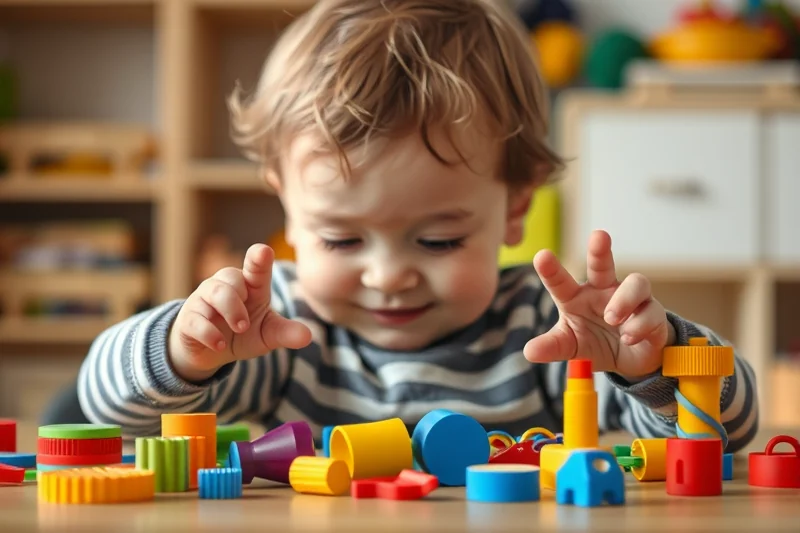
I’ve noticed how my daughter’s problem-solving skills have improved dramatically since we started incorporating more play based learning into our daily routine. When she’s playing with a puzzle, she doesn’t just look for the right piece — she tries different ones, thinks about the shape, and learns through trial and error. It’s like watching her brain grow right before your eyes.
She also learns to plan ahead when playing with building blocks. She’ll look at the structure she wants to build and figure out how to get there, adjusting as needed. This kind of thinking is crucial for cognitive development and prepares them for more complex learning later on.
Studies have found that children who engage in play based learning show significant improvements in memory, attention, and logical reasoning. It’s not just about having fun — it’s about building the foundation for lifelong learning.[3]
Learning through play isn’t just fun — it’s the most effective way for children to grow.
Related: Learning on the fly
The Social and Emotional Benefits of Play Based Learning
One of the most surprising things I’ve noticed about play based learning is how it enhances social and emotional skills. When my kids play together, they learn to share, take turns, and resolve conflicts without being told to. It’s all part of the natural process of playing with others.
I remember a time when my son and daughter were arguing over a toy. Instead of stepping in and telling them what to do, I let them work it out. They ended up compromising and even created a new game that combined both of their interests. That kind of resolution is powerful and teaches them important life skills.
Research shows that children who engage in collaborative play have better emotional regulation and are more empathetic. It’s a win-win for both their social skills and their emotional intelligence.[4]
Make sure your play environment is a safe space where kids can express their emotions without judgment. Use play to model empathy and understanding, and let them explore their feelings through imaginative scenarios.
“There’s something magical about the way my son’s face lights up when he’s building a tower with wooden blocks.”— Playschooled editors
Related: What is a free to play
How Play Based Learning Encourages Creativity and Innovation
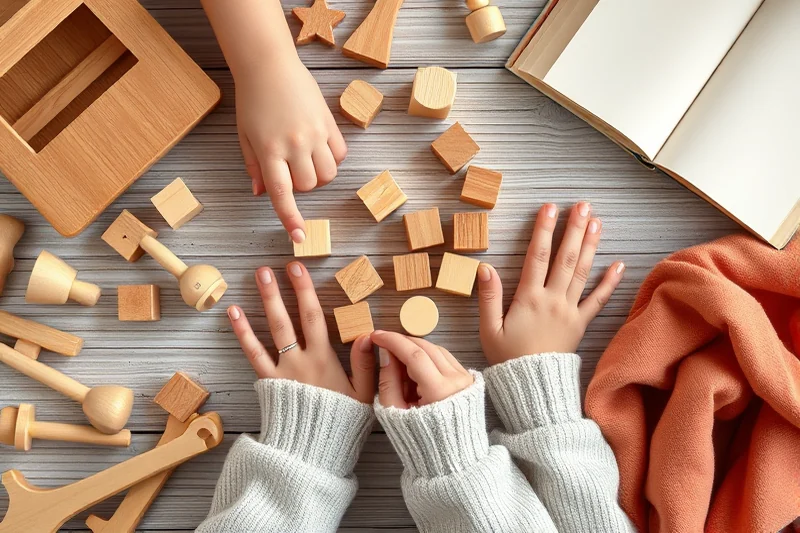
When I think about creativity, I think about how my kids use the simplest things to create amazing things. A cardboard box can become a spaceship, a treehouse, or even a castle. It’s all about imagination and the freedom to explore without limits.
I’ve watched my son create entire stories with his stuffed animals, and each time, the plot gets more complex and detailed. He’s not just playing — he’s creating narratives, developing characters, and making decisions. It’s incredible to see his mind at work.
Play based learning gives children the space to think in new ways, to take risks, and to try out ideas without fear of failure. That kind of thinking is exactly what we want to encourage in the next generation.
Related: What is golf lessons
The Role of the Adult in Play Based Learning
One of the biggest mistakes I made early on was trying to take over the play experience. I would start explaining things, showing them how to do things, and in the process, I took away their autonomy. The learning stopped right then.
Now, I’ve learned to step back and observe. I let them lead the play, and I only jump in when they ask for help or when a learning opportunity presents itself. It’s a subtle but powerful shift that makes all the difference.
Research shows that the most effective play based learning happens when adults are present but not directive. They support, they encourage, and they let the child take the lead. That’s how real learning happens.
Related: What is to play house
How Play Based Learning Supports Language Development
I’ve noticed how my daughter’s vocabulary has grown so much since we started using more open-ended play. When she’s playing with her stuffed animals, she’s narrating their stories, using new words, and even asking questions. It’s like a natural language workshop.
When she plays pretend, she’s constantly using language to communicate with her stuffed animals, to describe the world around her, and to express her thoughts and feelings. These conversations are rich with language and help build strong communication skills.
Studies have found that children who engage in imaginative play have stronger language development and are more likely to reach language milestones earlier. It’s not just about speaking — it’s about understanding and expressing complex ideas.
Imaginative play is a language lab in disguise.
Related: Awakening legends of learning
The Long-Term Impact of Play Based Learning
As I watch my kids grow, I can see how the play based learning experiences from their early years are still influencing them today. They approach new challenges with confidence, they’re more curious, and they have a natural love for learning. It’s like a foundation that supports them through every stage of life.
I’ve seen how the skills they developed through play — like problem-solving, creativity, and social skills — have helped them in school, in friendships, and even in their future careers. It’s not just about learning to read or count — it’s about learning to think, to collaborate, and to be resilient.
Research shows that children who experience play based learning are more likely to excel academically and have higher emotional intelligence as adults. It’s a long-term investment in their future that pays off in countless ways.
🌱 Gentle Introduction
Start with small, low-pressure play sessions that focus on exploration and curiosity without any expectation of learning outcomes.
🚀 Fast-Track Play
Use short, focused play sessions with clear learning goals to maximize the impact of each activity in a limited timeframe.
🌿 Travel/Outdoors Play
Take advantage of nature and open spaces for play based learning, using the environment as a hands-on classroom for discovery and exploration.
👯♀️ Multiples Play
Use group play to encourage collaboration, social learning, and shared problem-solving among siblings or peers.
🔄 Regression Reset
When learning plateaus, reset with a play based learning approach to rekindle curiosity and build new skills in a fun and engaging way.
| The mistake | Why it happens | The fix |
|---|---|---|
| Trying to force learning into play | When learning is forced, it takes away the joy and natural curiosity that makes play based learning effective. | Let your child lead the play. Focus on engagement, not outcomes. |
| Over-directing or taking over the play experience | Adults taking over the play experience can stifle creativity and independent thinking. | Be a co-player, not a director. Support, but don’t control. |
| Using too many structured activities | Too much structure can make play feel like work, reducing its effectiveness and enjoyment. | Balance structure with open-ended exploration. Let your child choose what to play with and how. |
| Focusing only on academic skills | Play based learning is about more than just academics — it’s about holistic development. | Include play that nurtures social, emotional, and creative skills alongside academic learning. |
Essential Is Play Based Learning Effective
Common Questions
How can I incorporate play based learning into a busy schedule?
What if my child is not interested in structured play?
How do I know if play based learning is working?
Can play based learning replace traditional education?
References
- The Role of Play-Based Learning in Early Childhood Education (academia.edu)
- Powerful Role of Play in Early Education Resources (cde.ca.gov)
- The Power of Play-Based Learning in Early Childhood Education (cune.edu)
- Chapter 48. Delaware Play to Learn Program (delcode.delaware.gov)
Cite this guide
Playschooled (2026). Is Play Based Learning Effective and Why Is It Essential. https://playschooled.com/essential-is-play-based-learning-effective/
Feel free to cite or share this guide.